
Introduction
The open‑plan office was built on a promise.
Remove the walls between people, the logic went, and collaboration flows freely. Ideas cross‑pollinate. Teams bond. Innovation accelerates. And real estate costs drop.
For two decades, corporations around the world accepted this logic and invested accordingly. Today, the research has returned its verdict — and it is not what the open‑plan advocates predicted.
A systematic review of 46 empirical studies published between 2005 and 2022 found that open‑plan offices can reduce real‑estate costs but lead to lower performance levels, thereby imposing a productivity tax that outweighs the initial cost savings. More strikingly, a separate systematic review found consistent negative associations with health, satisfaction, and productivity — with not a single study measuring productivity finding a positive effect.
And the primary cause of these outcomes? Noise. There is little doubt that noise is the primary culprit for distraction in open offices. Open office workers waste twice as much time as those in private offices due to noise alone.
But the failure of the open‑plan office does not mean the solution is returning to rows of cellular private offices. The organisations that have cracked the performance paradox have done so with a more sophisticated model: activity‑based working — a workplace design philosophy that stops asking employees to do every type of work in the same kind of space, and instead designs the environment around the work itself.
This guide explains what activity‑based working actually means, what the research says about its effectiveness, what the five essential workspace zones look like in practice, and why certified soundproof office pods are the infrastructure component that makes the whole system function.
What Activity-Based Working Actually Means — and What It Does Not
Activity‑based working (ABW) is a workplace strategy in which employees do not have assigned, permanent desks. Instead, they move through a variety of purpose‑designed workspace zones throughout the day based on the task at hand — concentrating in quiet focus spaces for deep cognitive work, collaborating in open social zones for group ideation, taking calls in enclosed acoustic spaces, and meeting formally in dedicated rooms.
The concept is not new — it emerged in the Netherlands in the early 1990s through the work of consulting firm Veldhoen + Company — but its relevance has intensified considerably in the post‑pandemic hybrid work era, where the average office attendance rate of 40–60% in most organisations makes dedicated individual desks an inefficient use of real estate and makes the quality of available workspace more important than its quantity.
What ABW is not
ABW is not hot‑desking. Hot‑desking is a cost reduction measure — reducing desk count below headcount ratio to lower real estate costs. ABW is a performance optimisation measure — designing different types of space for different types of work. The difference matters enormously: hot‑desking without purpose‑specific workspace zones simply strips employees of their personal workspace without providing alternatives, and generates the dissatisfaction and performance loss the research predicts. ABW with well‑designed zone variety produces measurable performance improvements.
ABW is not open‑plan rebranding. A large open floor with some high‑top tables and a few sofas is not ABW. Genuine ABW requires meaningfully distinct zones with genuinely different acoustic, visual, and spatial properties — including, critically, enclosed private spaces.
ABW is not suitable for every type of organisation. ABW works well for organisations where knowledge work is diverse — where the same employee spends portions of their day in individual concentration, collaborative discussion, and formal meeting. It works less well for roles that require sustained presence at a single fixed workstation.
The Research Case: What ABW Delivers When Designed Correctly
The systematic review of 46 office design studies found that activity‑based working has the potential to enhance collaboration and interaction, but is dependent on professional and proactive management — and specifically, on the provision of appropriate space types within the ABW environment.
The critical condition that distinguishes effective ABW from poorly executed ABW is the availability and quality of enclosed, quiet spaces for focused individual work. Employees in open‑plan offices experienced a 66% decrease in their ability to focus on deep work tasks compared to those in private offices. The implication is direct: an ABW environment that does not provide high‑quality enclosed focus spaces simply replicates the focus deficit of the open‑plan office it replaced.
The empirical evidence does not support the anecdotal claims of increased collaboration and communication between open‑plan office workers — and consistent negative associations with health, satisfaction, and productivity are found across the research base. ABW’s potential advantage over simple open‑plan design lies precisely in its recognition of this evidence: it does not assume that open space produces collaboration. It designs specific conditions for collaboration and separate conditions for focus — and lets employees choose between them based on their current task.
The Gensler Global Workplace Survey (2023), which surveyed over 14,000 workers across 10 countries, found that high‑performing workplaces offer a mix of spaces — employees need both collaborative areas and more private, quiet spaces for focused activities in order to achieve optimal performance. This finding — that performance requires both, not either/or — is the empirical foundation of the ABW model.
The Five Essential Zones of an Effective ABW Environment
Effective ABW design requires at minimum five distinct zone types, each with genuinely differentiated acoustic and spatial characteristics. The following framework reflects the converging guidance from workplace design research and professional practice.
Acoustic performance overview for all HIGHKA pods:
All six HIGHKA office pod models (Model S, Model M, Model SL, Model ML, Model L, Model XL) feature consistent, professionally tested full‑frequency noise reduction performance, with a comprehensive weighted acoustic attenuation of DS,A = 29.4 dB. Tailored for real‑world office noise environments, the pods deliver targeted noise reduction across core human speech and office noise frequencies, perfectly matching the acoustic demands of hybrid and activity‑based workspaces.
Full frequency‑dependent speech level reduction test data is shown below, covering low-frequency ambient noise to high-frequency speech interference:
|
Frequency (Hz)
|
Speech Level Reduction (dB)
|
Noise Scenario Adaptation
|
|---|---|---|
|
125
|
25.1 |
Filters low-frequency ambient airflow & floor noise
|
| 250 | 24.1 |
Suppresses background office operational noise
|
| 500 | 28.8 |
Core suppression for daily conversational speech
|
| 1000 | 33.4 |
Eliminates clear voice interference in working areas
|
| 2000 | 39.3 |
Blocks high-frequency dialogue & meeting noise
|
| 4000 | 41.1 |
Reduces high-pitched office equipment & voice overspill
|
| 8000 | 43.9 |
Filters ultra-high frequency ambient interference
|
|
Weighted Comprehensive Attenuation
|
DS,A=29.4 dB |
Overall professional office acoustic privacy performance
|
This full frequency‑band test report is available for download as supporting documentation on our product page. The six‑layer composite acoustic structure independently developed by HIGHKA precisely targets the 500Hz–4kHz human speech core frequency range, achieving maximum speech intelligibility reduction. Bidirectional patented isolation technology delivers inward acoustic privacy for focused work and outward speech containment, effectively avoiding noise disturbance to the surrounding open‑plan workspace.
Zone 1: Concentrated Focus — Individual Acoustic Enclosure
Purpose: Sustained individual cognitive work — complex writing, analysis, programming, financial modelling, confidential reading, deep problem‑solving — that requires minimal acoustic interruption and strong speech‑privacy performance.
Acoustic requirement: Ambient noise ≤35 dB; robust speech‑privacy performance that suppresses external speech intelligibility and eliminates intermittent office noise interference. This is the most demanding acoustic specification in the ABW environment, and the one that open‑plan offices fail most completely to provide.
Design approach: Enclosed spaces with independently tested full‑frequency acoustic performance. Soundproof office pods are the preferred solution for this zone in most ABW deployments — they achieve professional‑grade speech‑attenuation performance at a fraction of the cost of permanent construction, with no permit requirements and full mobility for reconfiguration.
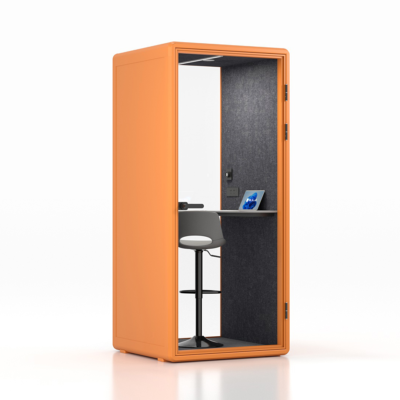
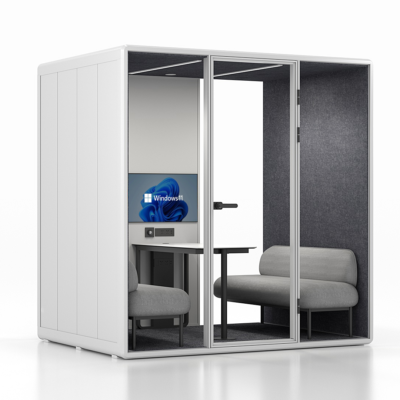
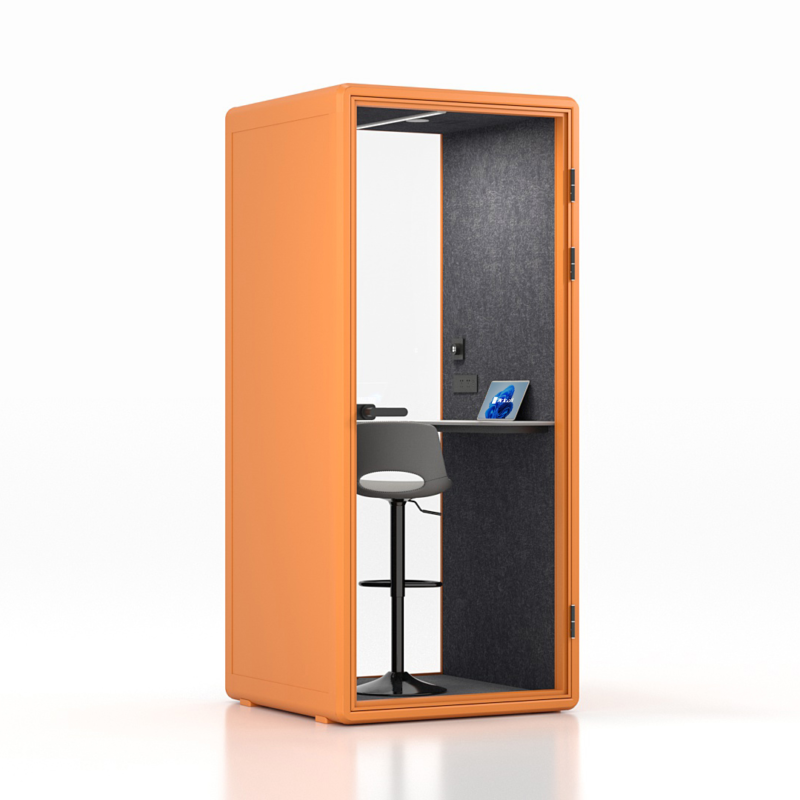
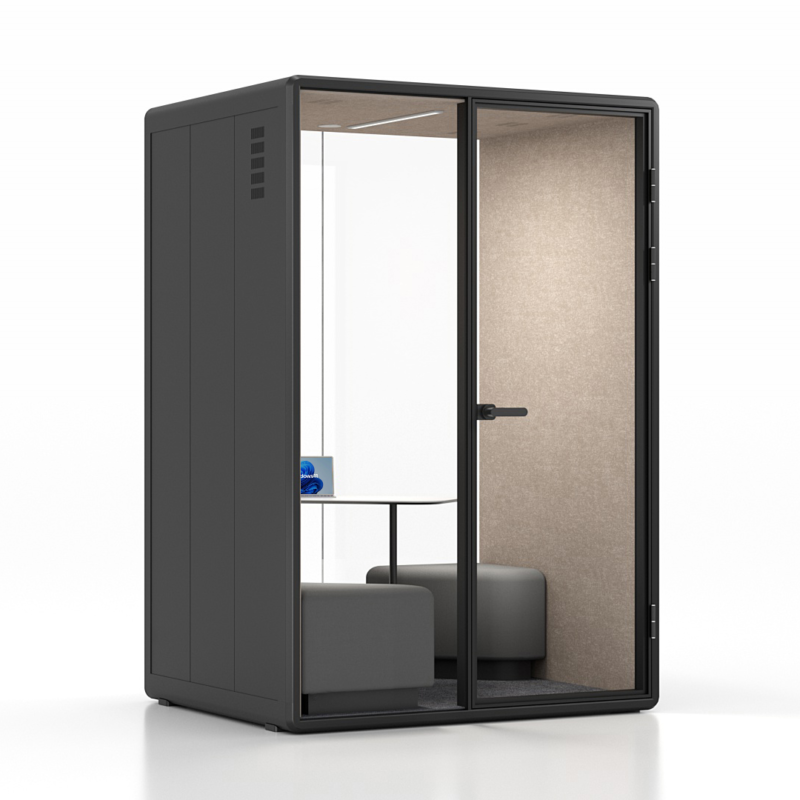
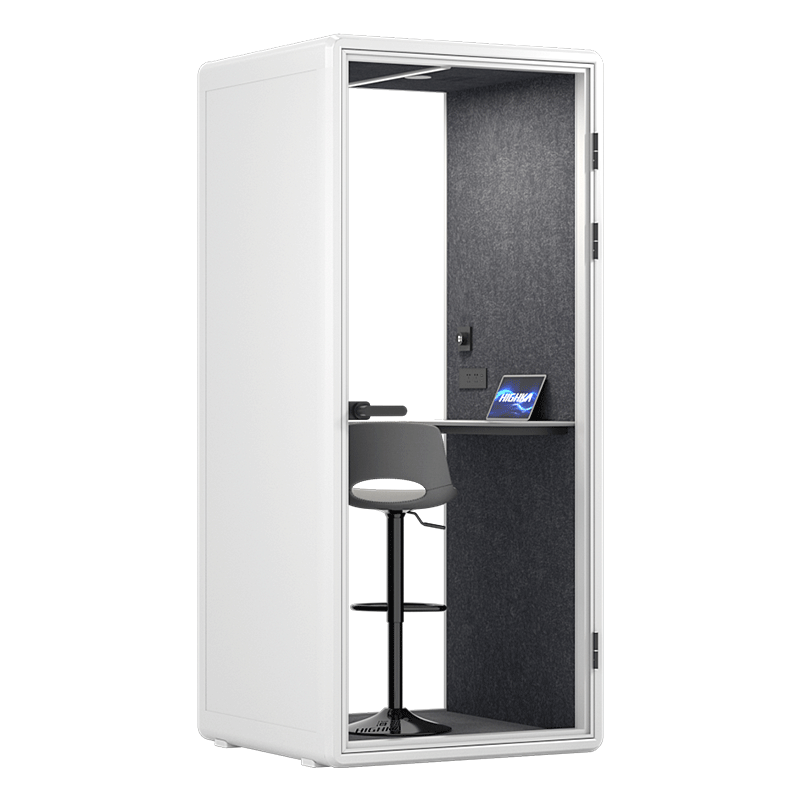
HIGHKA specification for this zone:Model S (1‑person) and Model M (1‑2 persons) are purpose‑built for individual deep‑focus tasks. Both deliver industry‑leading full‑frequency noise reduction performance with a weighted acoustic attenuation of 29.4 dB. The pods excel at suppressing 500Hz–4kHz human speech noise, completely isolating users from surrounding workplace dialogue and ambient distractions. Microwave radar breathing‑sensor technology ensures ventilation and lighting remain active even when the user sits still for long‑duration deep‑work sessions, eliminating unwanted shutdowns common with conventional PIR sensors.
Zone 2: Call and Video Collaboration — Enclosed Communication Space
Purpose: Phone calls, video meetings, one‑to‑one discussions, and any audio communication that cannot be conducted from an open desk without creating mutual disruption — outbound voice disturbing neighbours, inbound ambient noise degrading call quality.
Acoustic requirement: Bidirectional full‑frequency noise attenuation to ensure clear audio transmission. For video calls specifically, background noise inside the pod remains below 35 dB, effectively preventing external ambient noise and human speech from penetrating the pod and affecting call clarity.
Design approach: Enclosed pods sized for 1‑2 people, positioned accessibly from the main open work floor without requiring employees to leave the floor entirely.
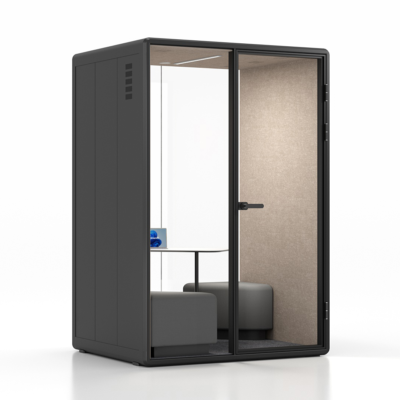
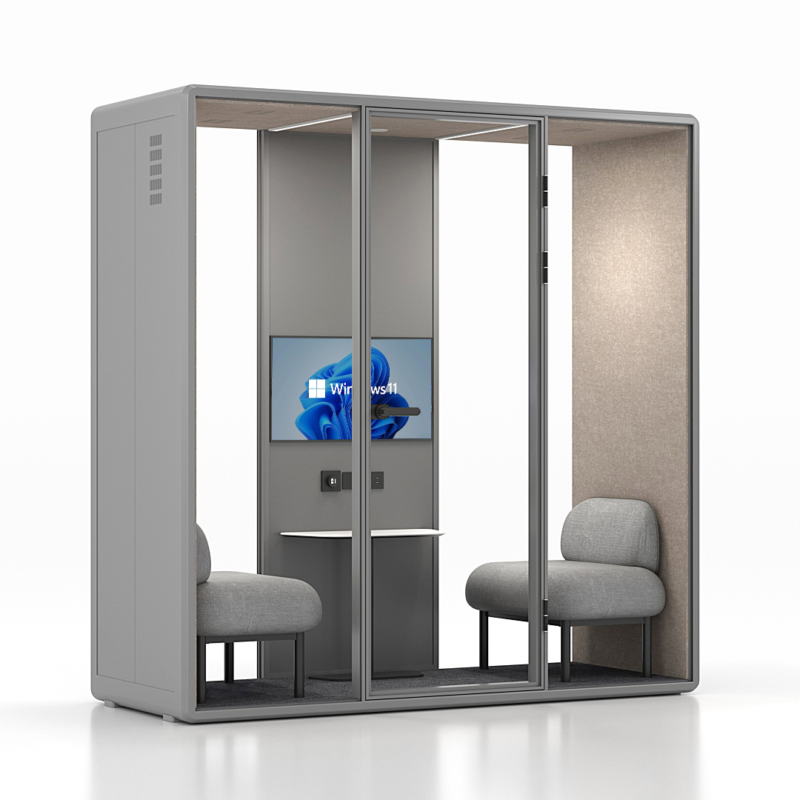
HIGHKA specification for this zone:Model S and Model SL (2‑person) deliver stable bidirectional full‑frequency noise reduction (weighted 29.4 dB). With excellent attenuation performance for 1000Hz–4000Hz high‑frequency speech noise, the pods perfectly eliminate call echo and external voice interference, ensuring studio‑level clear call and video conference quality. The radar‑based sensor system keeps environmental services running through long video‑call sessions.
Zone 3: Small Group Collaboration — Semi-Enclosed Discussion Space
Purpose: Two‑to‑four person collaborative work — team check‑ins, project reviews, client call preparation, creative brainstorming sessions — that benefits from acoustic separation from the open floor without requiring full conference room formality.
Acoustic requirement: Effective full‑frequency acoustic separation from the open floor to protect occupants from ambient low‑frequency noise and isolate group discussion noise, avoiding interference with adjacent focus workers.
Design approach: Meeting pods positioned between the open collaboration zone and the quiet focus zone, forming a layered acoustic gradient for the entire office space.
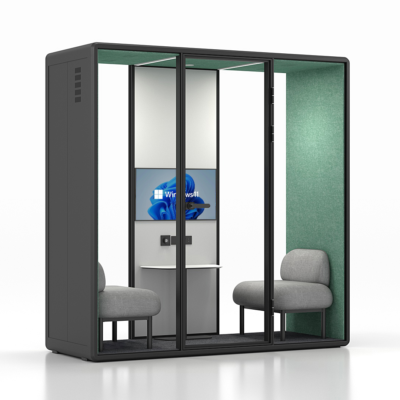
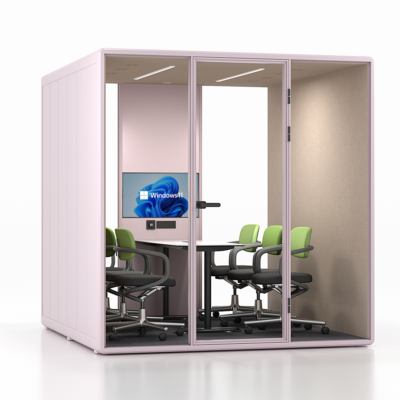
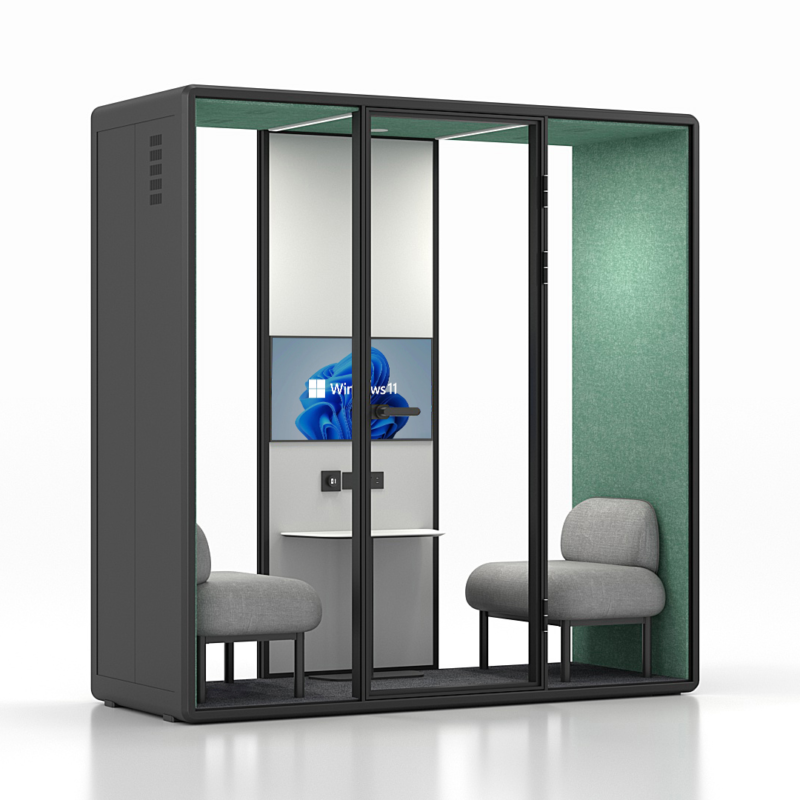
HIGHKA specification for this zone:Model ML (2‑4 persons) and Model L (4‑6 persons) are designed for small‑group ABW collaboration. Relying on consistent full‑frequency noise reduction performance (weighted 29.4 dB), the pods balance internal communication convenience and external noise isolation. Stepless adjustable Osram LED lighting (3000K‑6500K, 0‑1800 lm) allows teams to tune lighting for brainstorming or review‑style work, creating a focused and efficient group collaboration atmosphere.
Zone 4: Open Collaboration — Active Social Work Area
Purpose: Informal group interaction, spontaneous conversation, team social connection, stand‑up meetings, and any activity that genuinely benefits from the energy and accessibility of an open, visually connected environment. This is the zone the open‑plan office originally promised — but could never deliver cleanly because it placed all work types in the same acoustic space.
Acoustic requirement: No high acoustic specification required — this zone is intended to be acoustically active. Its design should prevent concentrated high‑frequency conversation noise from bleeding into adjacent focus and quiet zones through strategic placement and partial acoustic barriers.
Design approach: Central, visible, energetically designed area with comfortable seating, standing surfaces, and informal meeting furniture. Hard surfaces are acceptable here — they contribute to the active acoustic energy that makes this zone feel different from the quiet zones.
Zone 5: Formal Meeting — Private Conference Space
Purpose: Structured group meetings, client presentations, sensitive management discussions, and formal discussions requiring both capacity for 4–8+ people and reliable speech containment from outside the room.
Acoustic requirement: Full full‑frequency speech noise containment, blocking all‑round ambient office noise and external dialogue interference, matched with high‑quality presentation technology for professional formal meetings.
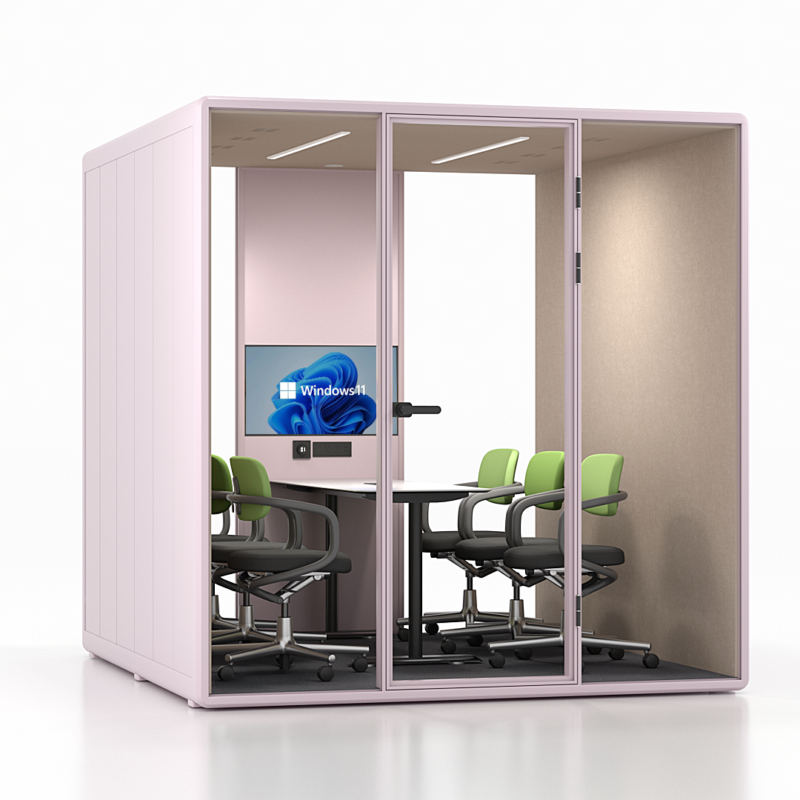
Design approach: Traditional private meeting rooms — either permanent construction or large‑format meeting pods. For organisations where formal meeting demand is relatively low (fewer than 2 dedicated meeting rooms per 50 employees), HIGHKA Model XL (6‑8 persons) provides enclosed meeting capacity without permanent construction.
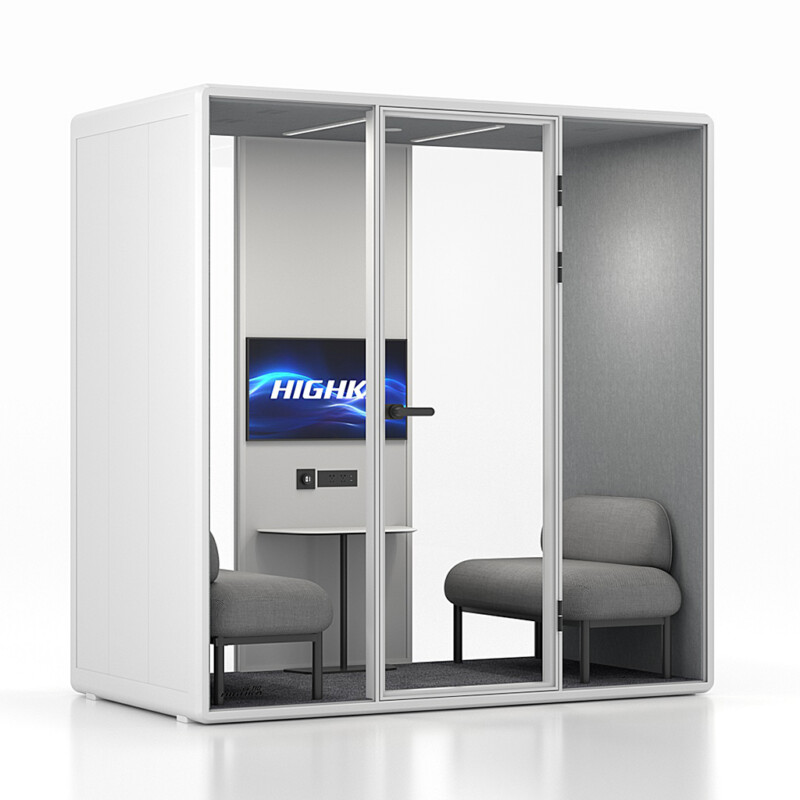
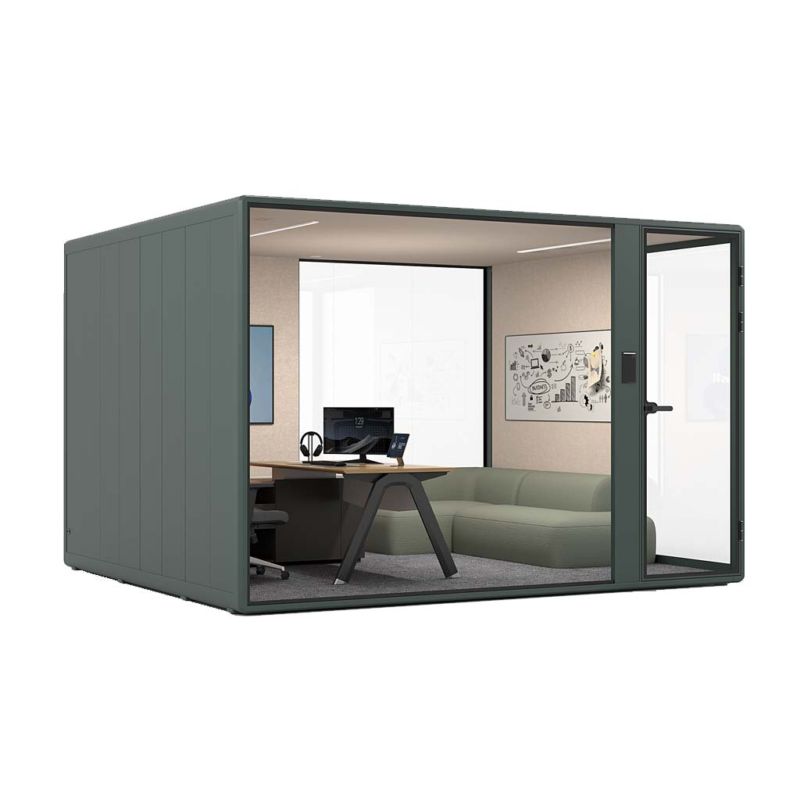
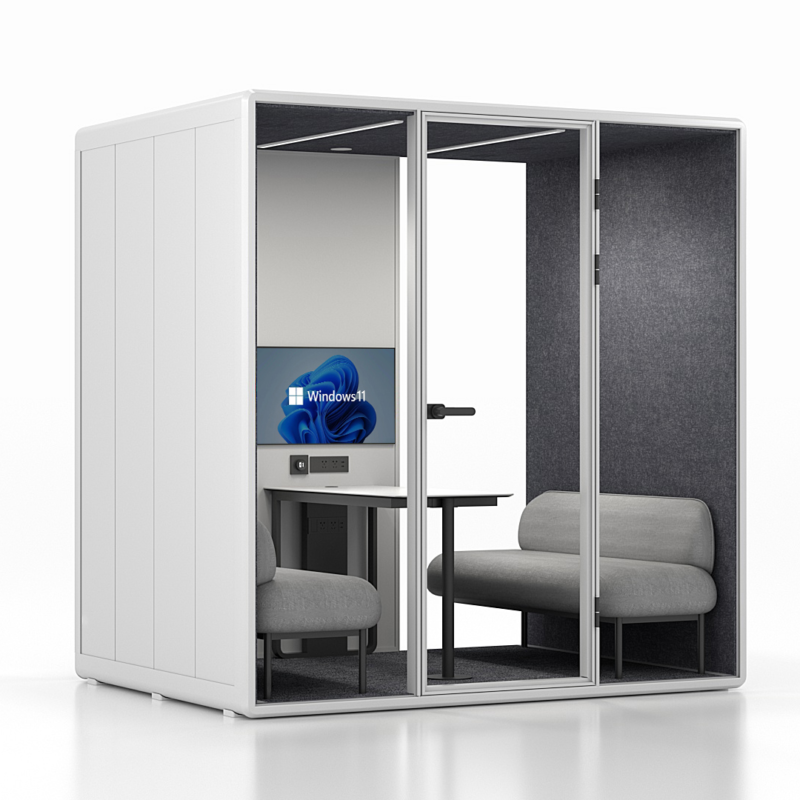
HIGHKA specification for this zone: HIGHKA Model XL supports formal client‑grade meetings, with built‑in display connectivity options. It inherits the brand’s consistent full‑frequency acoustic optimization performance (weighted noise reduction 29.4 dB), with outstanding suppression effect on low‑frequency environmental noise and high‑frequency confidential dialogue leakage, fully meeting the privacy and quietness requirements of business negotiations and formal team meetings.
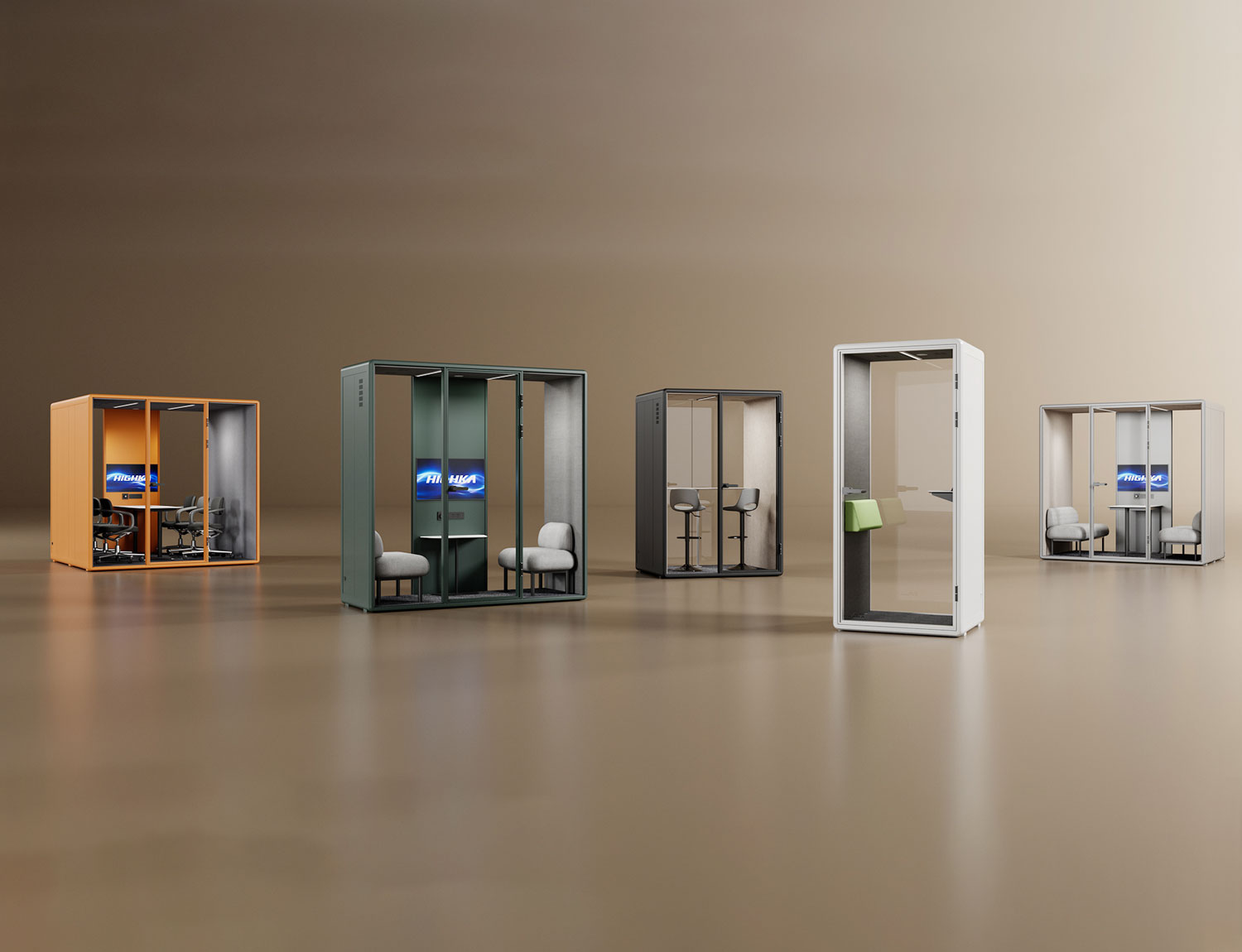
Explore the complete six‑model HIGHKA product portfolio (Model S, M, SL, ML, L, XL) covering 1‑person focus booths up to 8‑person formal meeting pods on the hkofficepods.com.
The ABW Zone Acoustic Gradient: How to Design for Performance
The key spatial principle in ABW layout design is the acoustic gradient — the intentional progression from high‑acoustic‑energy zones (active collaboration) to low‑acoustic‑energy zones (concentrated focus), with clear spatial and visual demarcation between them.
In practice, this means:
High‑energy zones (Zone 4) are positioned centrally or near entrances. They are the arrival zone — the first impression of activity and culture that employees and visitors encounter. Their acoustic energy is visible and appropriate to their purpose.
Focus zones (Zone 1) are positioned at the perimeter, near windows, or in structurally quieter areas. They are away from circulation routes, away from kitchen and social areas, and shielded from the sightlines of the high‑energy zone. All HIGHKA soundproof pods deliver stable full‑frequency noise reduction performance regardless of exact floor position, ensuring consistent quiet privacy for focus work in any office layout.
Call and small group zones (Zones 2‑3) act as the acoustic transition layer between the open collaboration zone and the focus zone — physically and acoustically graduated between the two extremes.
A floor plan that places pods randomly, without reference to the acoustic gradient, produces a suboptimal ABW environment. A floor plan that positions pods deliberately — within, at the edge of, or adjacent to the quiet zone, and away from the central energy zone — creates a coherent acoustic experience that employees intuitively navigate.
Implementing ABW: The Six-Phase Transition Framework
Transitioning from a traditional open‑plan office to a genuine ABW environment is a strategic change management process, not simply a furniture procurement project. The following six‑phase framework reflects the steps that research and professional practice identify as critical to successful ABW implementation.
Phase 1 — Workplace Analysis (Weeks 1–3)
Before any design decisions are made, collect data on how the current space is actually used. This means: badge or occupancy sensor data on desk utilisation rates across the week (most organisations find actual utilisation rates of 40‑60% for nominally full‑time staff); meeting room booking data showing average occupancy per booking and peak/off‑peak demand patterns; a structured employee survey on the types of work they perform (proportion of day spent in individual focus vs. collaborative vs. call‑based activity); and acoustic measurement at five or more floor points across different time periods.
This data determines the zone ratio appropriate for your specific organisation — the proportion of floor space allocated to each zone type. A professional services firm with high individual analytical work content requires a higher ratio of focus and call spaces than a product development team with high ideation and group review activity.
Phase 2 — Zone Ratio Design (Week 4)
Based on the workplace analysis, design the zone ratio. Published ABW benchmarks suggest starting ratios, though these should always be calibrated to organisational data:
| Zone Type | Typical Starting Ratio | Adjustment Factors |
|---|---|---|
| Concentrated focus (pods, quiet rooms) | 25–35% of total workspace | Higher for analytical/writing-intensive roles |
| Call and video spaces (call pods) | 15–20% of total workspace | Higher for client-facing or remote-collaborating teams |
| Small group collaboration (2–4 person) | 20–25% of total workspace | Calibrate to average meeting size data |
| Open collaboration (active zone) | 15–20% of total workspace | Lower for organisations with high individual work content |
| Formal meeting (4–8+ person rooms) | 10–15% of total workspace | Calibrate to formal meeting room demand data |
Phase 3 — Acoustic Infrastructure Selection (Weeks 5–6)
Select the specific acoustic infrastructure for each zone type. For focus and call zones that require high privacy, priority should be given to office pods with independent full‑frequency acoustic testing and verified weighted noise reduction performance. Professional ABW workspace construction no longer relies on vague acoustic effect descriptions, but takes accurate multi‑frequency noise reduction data as the core selection standard to ensure stable and reliable workspace quietness.
HIGHKA’s complete six‑model pod lineup (S / M / SL / ML / L / XL) adopts a unified six‑layer composite acoustic structure, with professionally tested full‑frequency noise reduction data and a weighted overall attenuation of 29.4 dB. Equipped with microwave radar breathing sensor, dual‑channel active ventilation, 0‑1800 lm stepless Osram LED (3000K‑6500K, CRI 90, UGR<20), EU E1 compliant materials, and full CE/UL/ISO/SGS certifications, it provides standardized, high‑performance acoustic infrastructure for professional ABW workspace construction. Complete frequency‑dependent acoustic test reports are provided as official supporting documentation.
Phase 4 — Floor Plan and Layout Design (Weeks 6–8)
Develop the floor plan incorporating the acoustic gradient principle. Key layout decisions: entry zone positioning (active collaboration centrally, focus peripherally); pod placement within the quiet zone or at its edge; circulation routing that avoids running main traffic through the quiet zone; kitchen, social, and printing areas positioned away from focus zones; and if possible, visual demarcation (flooring change, ceiling treatment, lighting change) between high‑energy and low‑energy zones to communicate the acoustic expectation to occupants.
When selecting from the six HIGHKA models, match pod capacity to your zone‑ratio headcount: single‑person pods (S/M) for Zone 1 focus; 1‑2‑person (S/SL) for Zone 2 call/video; ML/L for Zone 3 small‑group work; XL for Zone 5 formal meetings, realizing precise matching of space function and acoustic performance.
Phase 5 — Change Communication and Adoption (Weeks 8–12)
ABW implementation requires active change management. To make the open office model work, businesses need to have more private areas that allow workers to focus on projects with maximum privacy — and the transition to ABW only succeeds when employees understand and adopt the zone‑usage norms.
Communicate the zone design rationale clearly to all employees before deployment. Provide visible signage identifying each zone type and its intended use. Run a brief orientation — physical or digital — that explains how to use each zone type and what the behavioural expectations are. Establish a feedback mechanism for the first 60 days of operation.
Phase 6 — Measurement and Optimisation (Month 3–6)
After 60‑90 days of operation, measure: pod and collaboration space utilisation rates (booking data and observation); employee survey re‑run comparing results against the Phase 1 baseline; acoustic re‑measurement at the same five floor points; and any changes in meeting room booking patterns indicating whether the zone mix is appropriately calibrated.
Adjust zone ratios and pod placement based on utilisation data. ABW is not a one‑time design decision — it is an ongoing optimisation of the relationship between workspace configuration and organisational work patterns. If one pod size is heavily over‑utilised and another under‑utilised, re‑balance your mix across the six HIGHKA models to maximize space efficiency and acoustic experience.
Why Soundproof Pods Are the Non-Negotiable Core of Effective ABW
In theory, the focus and call zone requirements of ABW could be met by traditional enclosed office rooms or partitioned booths. In practice, for most organisations, soundproof office pods are the preferred solution for three structural reasons:
Speed and reversibility. ABW implementation timelines are compressed compared to renovation projects. Pods deploy in days; permanent construction takes months. And ABW implementations frequently require adjustment in the first 6‑12 months as actual utilisation patterns emerge and zone ratios need recalibration. Pods can be repositioned; construction cannot. The six‑model HIGHKA product family allows you to re‑balance capacity mix without building works, adapting flexibly to changing team work modes.
Certified, data‑driven acoustic performance. A partitioned room’s acoustic performance depends on on‑site construction quality, junction details, and materials, with no standardized test data support and unstable actual noise reduction effect. Every model in the HIGHKA portfolio delivers consistent, independently verified full‑frequency noise reduction data (weighted 29.4 dB), with clear attenuation effects for each office common noise frequency. It provides a predictable, reliable acoustic standard for all ABW functional zones, avoiding the acoustic experience deviation caused by on‑site construction differences.
Technology integration without construction. HIGHKA pods’ integrated technology platform — microwave radar sensing, PLC control, active ventilation, and stepless Osram LED lighting — provides a self‑contained, fully functional workspace without requiring additional electrical installation, HVAC adaptation, or network infrastructure in each location. The pod plugs in; the workspace is ready, with built‑in professional acoustic optimization effects.
Frequently Asked Questions
ABW is most effective in organisations where individual knowledge work, collaborative discussion, and call-based communication are all regular daily activities — professional services, technology, creative agencies, financial services, consulting, and media are canonical examples. It works less well in roles requiring sustained fixed-workstation presence (laboratory work, manufacturing-adjacent office functions, roles with multiple physical screens or equipment). The Gensler Workplace Survey consistently finds that high-performing workplaces across all industries share the common characteristic of providing both collaborative and private focused spaces — suggesting the zone variety principle applies broadly even where full ABW implementation is not appropriate.
Hot‑desking reduces desk‑to‑person ratio to save real estate. ABW redesigns the workspace mix to match activity types. In hot‑desking without ABW, removing desks without providing enclosed acoustic alternatives forces employees to conduct calls and focus work in an open noisy environment, retaining all the productivity loss problems of traditional open offices. In ABW, enclosed pods with data‑verified full‑frequency noise reduction performance replace some desk space in a planned manner, building independent quiet acoustic zones for focused work and calls. The result is a workspace where the quality of focused work is significantly improved compared to traditional open offices.
Based on the zone ratio framework above: for a 50-person team with 60% average office attendance (30 people in office on a typical day), the focus and call zone allocation (25–35% + 15–20% of workspace) should provide approximately 8–12 enclosed pod spaces. A starting configuration of 5 × Model S/M (focus and solo calls) + 3 × Model SL (two-person calls) + 2 × Model L (small group) provides a functional ABW acoustic infrastructure for this team size, with utilisation data informing adjustment after the first 60–90 days.
The research consistently shows that poorly implemented ABW — particularly hot‑desking without purpose‑specific zone variety and effective acoustic isolation — reduces satisfaction. Well‑implemented ABW with high‑quality zone variety and data‑backed full‑frequency noise reduction pods shows neutral to positive satisfaction outcomes. The critical variable is whether employees have reliable access to the quiet acoustic environment matching their work tasks, and HIGHKA’s standardized acoustic performance pods precisely meet this core demand.
Activity-Based Working Is Not a Trend — It Is the Correct Answer to a Research-Proven Problem
Open offices do not provide sufficient acoustic, visual, and psychological privacy for typical office work. This is not an opinion. It is the finding of decades of peer‑reviewed research across tens of thousands of workers.
Activity‑based working does not reject the open office’s collaboration goal. It fulfils it — by creating dedicated active collaboration zones free from acoustic contamination, and matching them with professional enclosed focus spaces that provide accurate full‑frequency noise reduction, meeting the acoustic quietness requirements of deep cognitive work.
The five‑zone ABW model — focus enclosure, call space, small group collaboration, open active zone, formal meeting — builds a scientific workspace system that balances collaboration and concentration. It avoids the core flaw of traditional open offices that force diverse work scenarios to adapt to a single acoustic environment.
High‑performance modern offices must eliminate the productivity tax caused by noise interference. Soundproof pods with professional full‑frequency acoustic testing data are the core infrastructure that empowers ABW zones to function efficiently, making the transition from noisy open offices to efficient diversified workspaces valuable.
HIGHKA smart soundproof office pods deliver precise, data‑driven acoustic optimization for all ABW workspace scenarios. All six models (S / M / SL / ML / L / XL) feature:
– Verified full‑frequency noise reduction performance, weighted comprehensive attenuation of DS,A = 29.4 dB
– Targeted optimization for 500Hz‑4kHz human speech core frequency, maximum reduction of working speech interference
– Microwave radar breathing sensor (0.1s response, −30 °C to 60 °C)
– Dual‑channel active ventilation with 30‑minute idle refresh cycle and post‑use odour clearance
– 0‑1,800lm stepless anti‑glare Osram LED (3,000K‑6,500K, CRI>90, UGR<20)
– Industrial‑grade PLC control & 95% recyclable EU E1‑compliant materials
– Capacity covering 1 to 6+ users, 8 exterior colour options
– Full CE, UL, ISO, SGS authoritative certifications
– Deployed in 50+ countries, 8‑12 year design lifespan, 1‑4 hours fast assembly with no permits required
Explore the complete six‑model product collection on the hkofficepods.com
Ready to design an ABW environment that actually delivers on the productivity promise?
👉 Request a free ABW acoustic zone consultation and HIGHKA pod configuration proposal
Share your floor plan, team size, work style mix, and current office pain points. We will provide a zone ratio recommendation, a pod configuration proposal, and a layout concept — at no obligation.