
Introduction
Most organisations treat office design as a cost centre. The research says they are leaving significant performance on the table by doing so.
A study by the Design Council found that strategic office design can lead to a 20% increase in employee productivity. A 2019 study by Dell found that nearly three-quarters (73%) of UK office workers would consider leaving their organisation if their workplace environment did not inspire them to fulfil their role. And research by the Fellowes Workplace Wellness Trend Report found that 93% of workers in tech said they would stay longer at a company that offers healthier workplace benefits — including ergonomic design, wellness spaces, and environmental quality.
These are not marginal engagement metrics. They are commercial performance indicators — linking the physical design of the workspace directly to output, retention, and the bottom line.
Yet the majority of office investment decisions are still made primarily on cost-per-square-foot rather than output-per-employee. Organisations pay meticulous attention to headcount, tooling, and process optimisation — and then house their knowledge workers in environments that research consistently shows suppress the performance those investments are intended to produce.
This guide presents the quantified research evidence across the five design dimensions that most directly determine workplace performance: acoustics, lighting, air quality, spatial layout, and biophilic elements. For each dimension, we present the published data on productivity impact, the standard that evidence identifies as optimal, and the design intervention that best delivers it.
Why Workplace Design Is a Productivity Investment, Not a Facilities Cost
Before examining individual design dimensions, it is worth establishing the order of magnitude of the productivity opportunity that workplace design represents.
The physical work environment significantly impacts employee productivity, job satisfaction, health, and well-being. Workplace design has become a key strategic resource for many organisations — the second largest expense for most companies after people costs.
The logic of treating design as a strategic investment follows directly from cost structure: if people are the largest cost, and the physical environment measurably affects what those people produce, then the physical environment is a lever on the return from the largest cost. ASID research demonstrated that thoughtful workplace design improvements generated a 16% increase in presenteeism scores — meaning employees felt they were working at approximately 90% of their possible job performance, compared to lower levels in the prior office environment. Absenteeism scores improved by 19% in the same study.
A large-scale Leesman study of 57,286 workers found that the experience and support of the work environment to perform a specific task directly influences employees’ location decisions — confirming that workspace quality is a primary driver of whether employees choose to come to the office and how they perform when they do.
The investment case is therefore not speculative. Workplace design improvements with measurable ROI are documented across multiple dimensions. The question is not whether design affects productivity, but which design dimensions offer the highest returns — and in what sequence to address them.
Design Dimension 1: Acoustics — The Highest-Impact, Most Commonly Neglected Element
Of all the physical environment factors that workplace design can address, acoustic quality has the most consistently documented relationship with knowledge worker performance — and is the dimension most frequently neglected in cost-driven office fit-outs.
According to research by Leesman, only 33% of employees find noise levels satisfactory in the workplace. According to the European Environment Agency, noise pollution is considered to be the second biggest environmental stressor — and high noise levels make it difficult for employees to concentrate while increasing cortisol levels.
A 2019 survey of UK workers by Savills UK found that 37% of workers in open-plan workspaces believe that the design of their office decreases their productivity levels.
The mechanism is well-established: irrelevant speech — the dominant noise type in open-plan offices — activates the brain’s language processing system involuntarily, competing directly with the attentional and working memory resources that knowledge work requires. This competition is not resolved by habituation. It imposes a sustained cognitive load that reduces both the quantity and quality of output throughout the working day.
The design standard that acoustic research identifies as necessary for sustained cognitive focus work is ≤35 dB ambient noise — the level at which irrelevant speech from outside becomes inaudible and the brain’s language processing demand is removed. This is the threshold defined by the WHO Environmental Noise Guidelines (2018) and the WELL Building Standard v2 for cognitive workspace acoustic comfort.
The gap between this standard and the 60–70 dB typical of open-plan offices is not bridgeable by acoustic panels, carpeting, or headphones alone. The only design intervention that achieves ≤35 dB for individual employees is physical acoustic enclosure — a certified soundproof space that the employee occupies for the tasks that require it.
HIGHKA soundproof office pods achieve DS,A = 29.4 dB speech‑level reduction, independently laboratory‑tested and verified by SGS following ISO 23351‑1 test protocol. The pod delivers differentiated frequency‑dependent sound attenuation: 125 Hz at 25.1 dB, 500 Hz at 28.8 dB, 2000 Hz at 39.3 dB, 4000 Hz at 41.1 dB, 8000 Hz at 43.9 dB. Stronger attenuation across mid‑to‑high speech frequencies helps contain human voice, suppressing irrelevant speech interference inside the pod. Deployed as enclosed focus and call spaces within an open‑plan floor, HIGHKA pods help bring internal ambient noise close to the ≤35 dB acoustic environment that cognitive focus work requires, without permanent construction, permits, or disruption to the surrounding space.
Design Dimension 2: Lighting — A 6.7–12% Productivity Gain from Getting It Right
Lighting quality is one of the most extensively researched workplace design variables — and one of the most directly actionable.
Research published in the Journal of Facility Management Education and Research showed that high-performance lighting can boost productivity by 6.7%, while natural light and window views can increase it by up to 12%.
A University of Oregon report found that 78% of office workers claim that access to natural light and views improves their overall happiness and well-being. Research shows that natural light regulates the body’s circadian rhythms, reducing fatigue, improving mood and sleep quality.
The productivity mechanism of lighting quality operates through two pathways. The first is physiological: light spectrum and intensity directly modulate melatonin suppression and cortisol rhythms, determining the alertness cycle throughout the working day. Cool-spectrum (5,000K–6,500K) blue-enriched light during morning and afternoon work hours suppresses melatonin and increases alertness; warm-spectrum (3,000K–4,000K) light in the late afternoon supports the natural cortisol reduction that precedes healthy sleep onset. Forcing employees to work under fixed-spectrum fluorescent or LED lighting throughout the day ignores these physiological rhythms entirely.
The second pathway is ergonomic: glare from overhead lighting and screen reflections creates visual fatigue that increases errors, reduces reading speed, and shortens sustained attention spans. The EN 12464-1 standard for workplace lighting sets a maximum UGR (Unified Glare Rating) of 19 for office environments — a threshold that many open-plan fluorescent installations exceed.
HIGHKA pods feature stepless dimming from 0 to 1,800 lm with colour temperature adjustable from 3,000K to 6,500K, using anti-glare Osram LED with CRI 90 and UGR <20. Individual user control via a single-touch visual panel with settings memory allows each employee to set the lighting condition that matches their task, time of day, and individual sensitivity — providing the circadian-aware, glare-controlled lighting quality that the research identifies as the highest-impact lighting intervention for individual knowledge workers.
Design Dimension 3: Air Quality — An 11% Productivity Lift from Better Ventilation
Research by the World Green Building Council showed that improving air quality — with lower levels of CO₂, pollutants, and higher ventilation rates in workplaces — can result in as much as an 11% improvement in productivity. Indoor air quality is typically 2–5 times worse than outdoor air quality.
The productivity mechanism of indoor air quality operates primarily through CO₂ concentration. In normally occupied, under-ventilated office spaces, CO₂ rises above 1,000 ppm within 30–45 minutes. ASID research implementing a CO₂ reduction design measured average office CO₂ at 570 ppm — 2.5 times lower than the society’s previous office — with the result that employees attributed improvements in their concentration and well-being directly to the improved air quality.
For enclosed spaces specifically — meeting rooms, focus pods, call booths — the risk of CO₂ accumulation is highest. The solution is active, mechanically managed ventilation that maintains air exchange at a rate that prevents CO₂ from accumulating to performance-degrading levels.
HIGHKA pods feature a dual-channel turbine ventilation system that maintains active airflow throughout occupancy. When unoccupied, the system actively refreshes the air every 30 minutes. After each use, a post-use odour clearance cycle prepares the pod for the next user. The microwave radar breathing sensor ensures ventilation remains active throughout the entire occupancy period, including during stationary focused work — unlike PIR-based systems that cut ventilation when no movement is detected. All HIGHKA pod materials comply with the EU E1 formaldehyde emission standard, ensuring the pod structure itself contributes zero additional VOC load to the enclosed air.
Design Dimension 4: Spatial Layout — The Balance Between Collaboration and Focus
The question of whether open or closed office environments are better depends fundamentally on how much focus and how much collaboration is required. Open areas encourage teamwork and communication, but they can also attract distractions. Closed areas can segregate team members while providing seclusion and quiet. Strategic office design includes establishing a workplace that supports both efficiency, attention, and collaboration.
Both the perceived support of concentrative activities and collaborative activities at home and at the office relate to higher perceived productivity. Organisations are recommended to redesign parts of the office environment to support both types of work activities — not prioritising one at the expense of the other.
The design conclusion is consistent across the research base: high-performance workplaces do not choose between open collaboration space and enclosed focus space. They provide both — in calibrated proportion to the actual work type mix of their teams.
Flexible offices — those offering a mix of private workspace and quiet spaces alongside comfortable breakout areas that foster collaboration — are among the best examples of contemporary office design optimised for productivity, and are experiencing strong demand as organisations recognise the limitations of pure open-plan layouts.
The practical design framework is the acoustic gradient: an open, high-energy collaboration floor in the central zone, transitioning through semi-enclosed small meeting spaces, to fully enclosed acoustic pods at the perimeter for individual focus and call work. This gradient provides employees with the environmental choice that research consistently identifies as the most important predictor of both satisfaction and performance — the ability to access the acoustic environment that matches the current task.
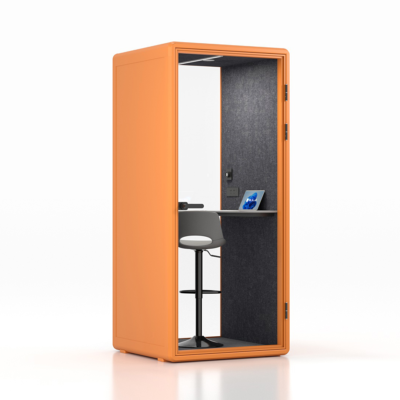
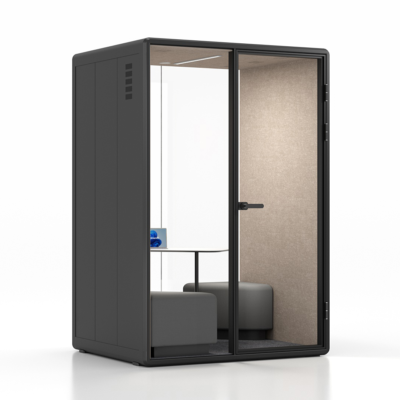
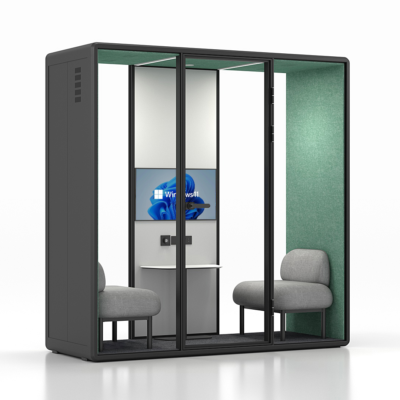
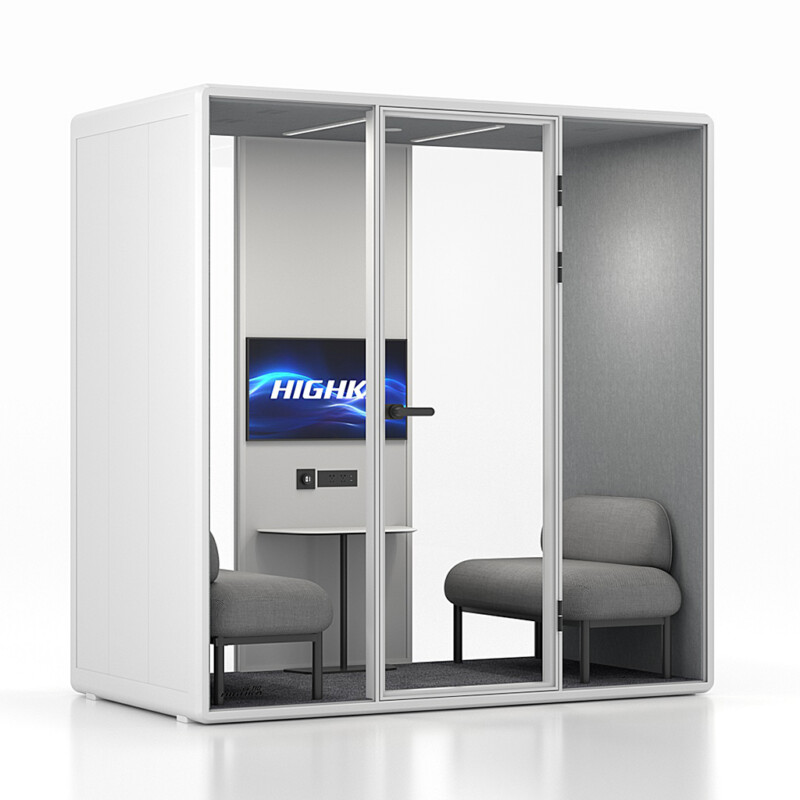
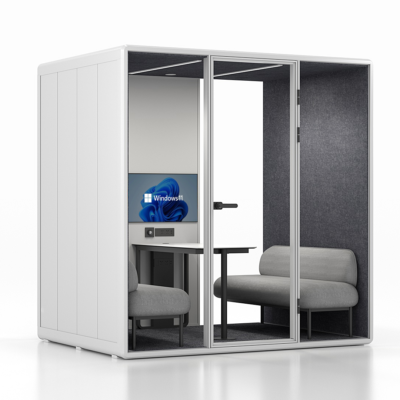
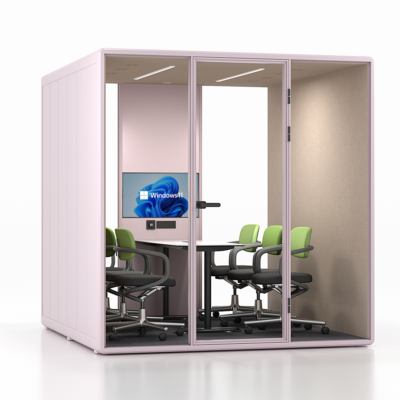
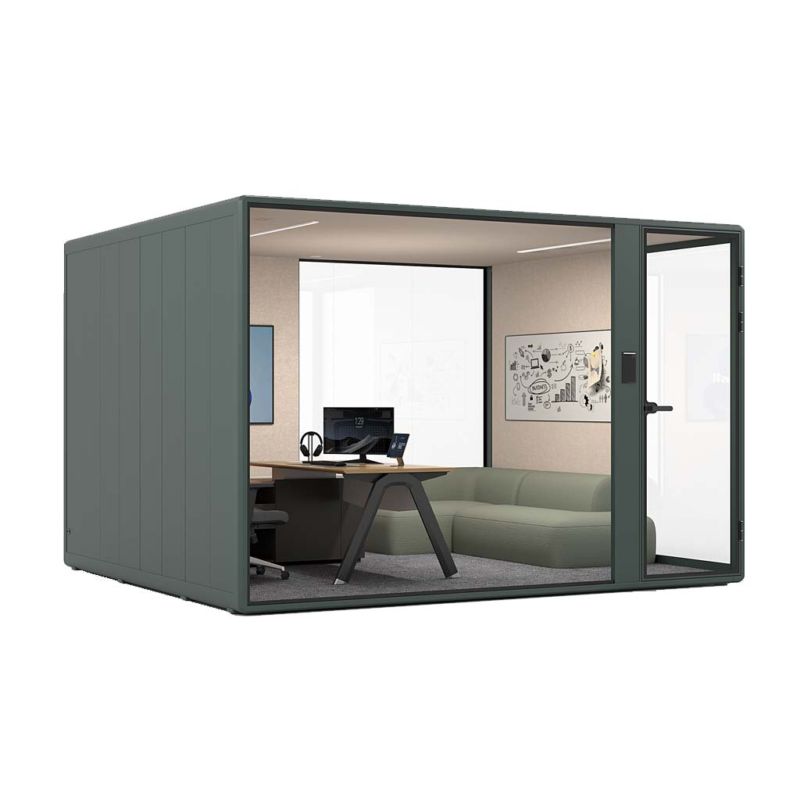
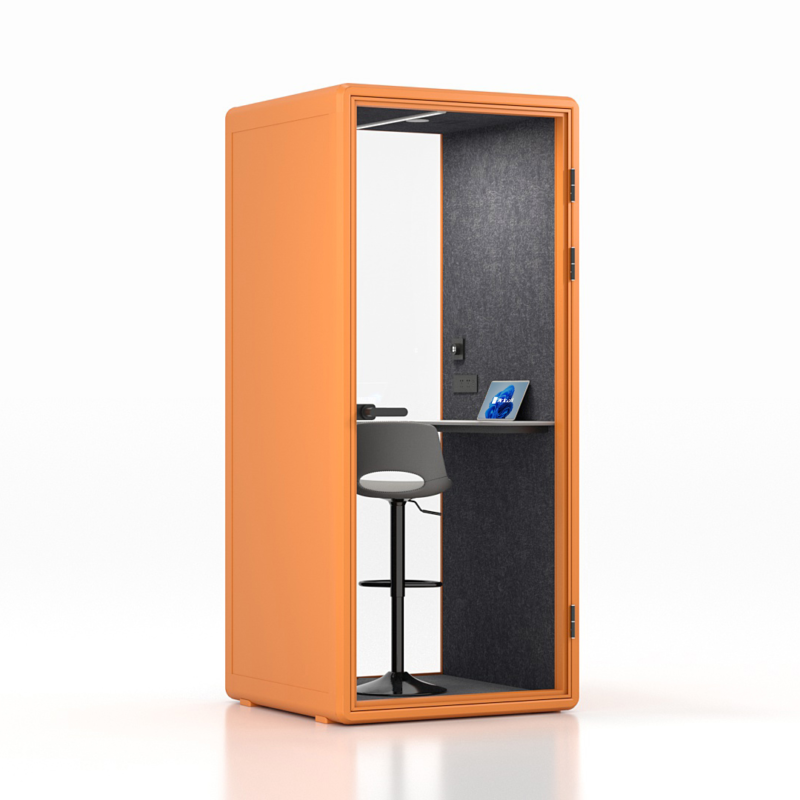
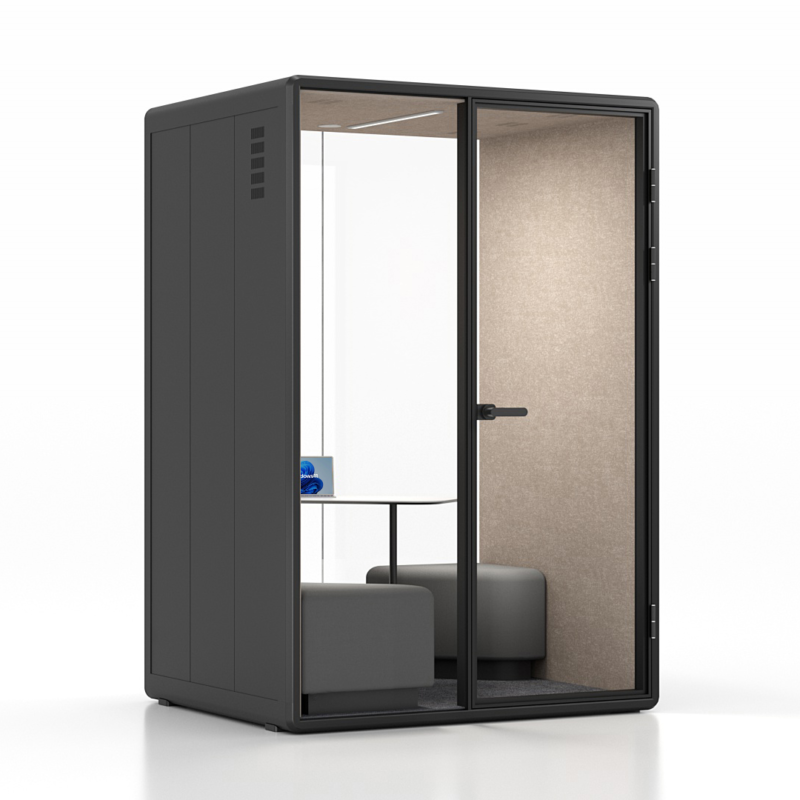
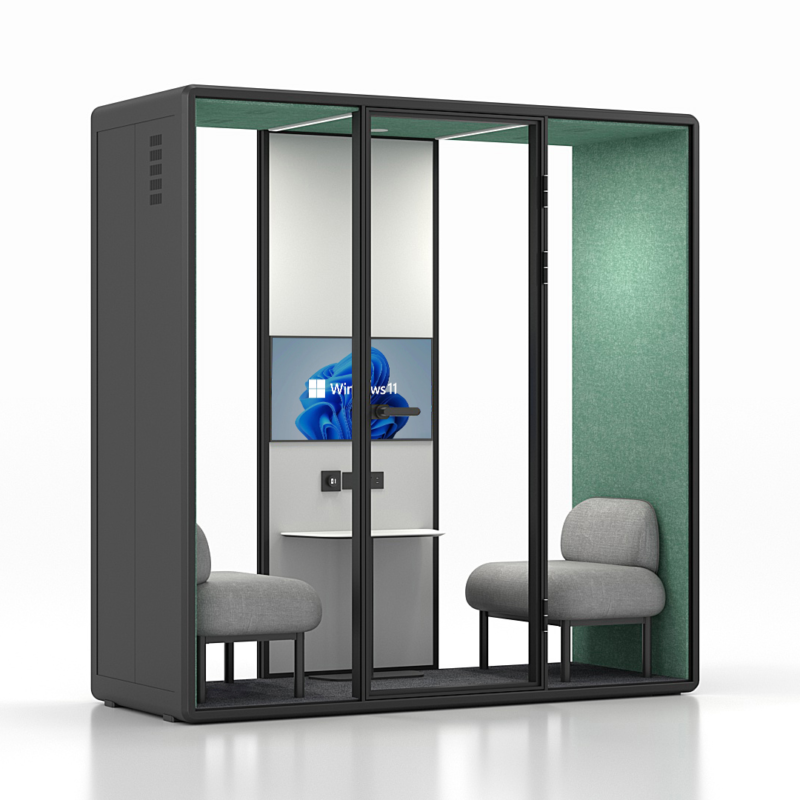
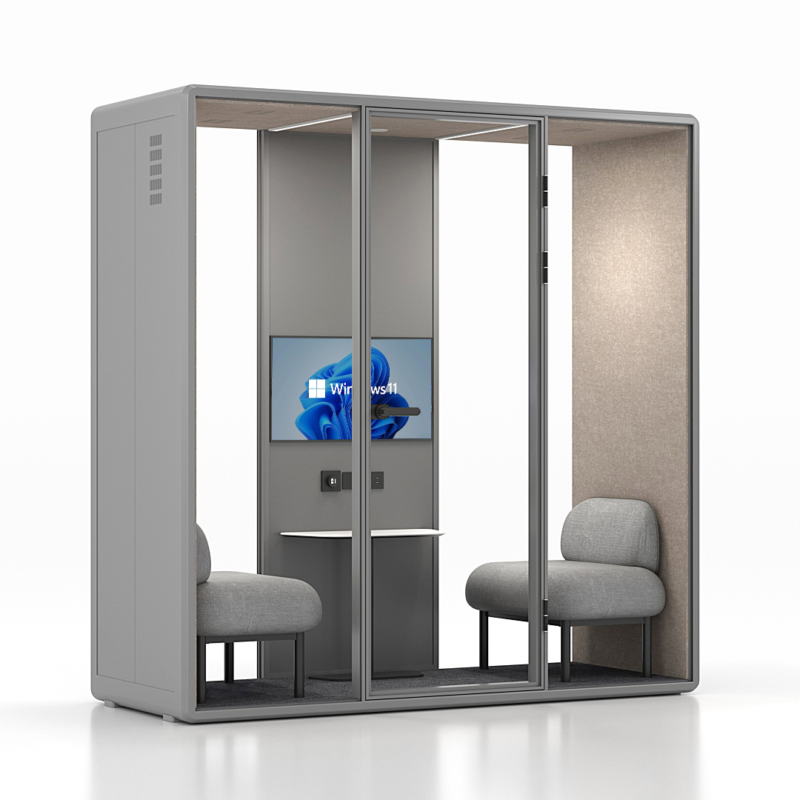
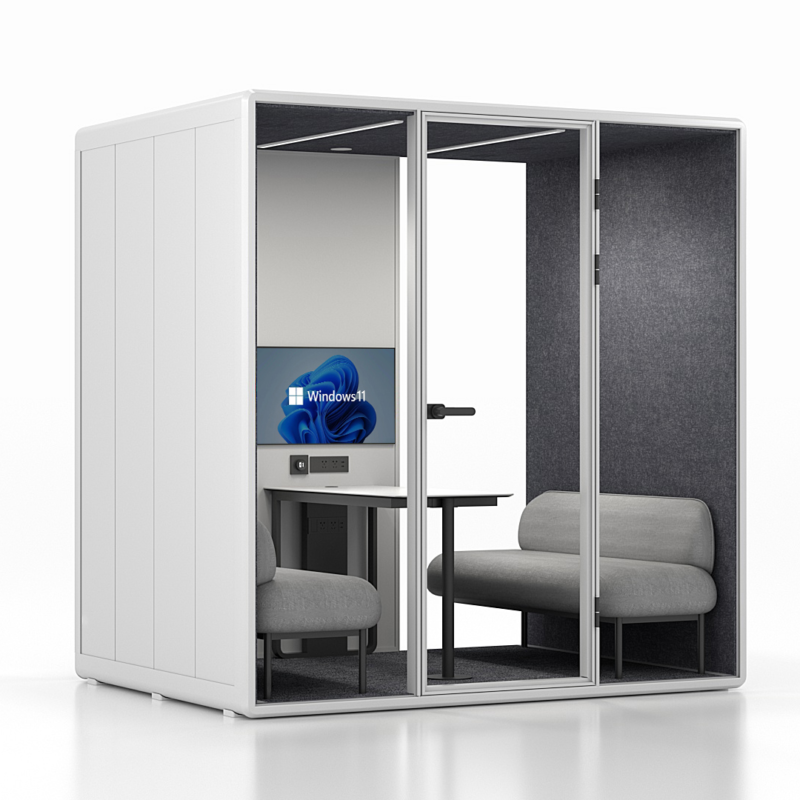
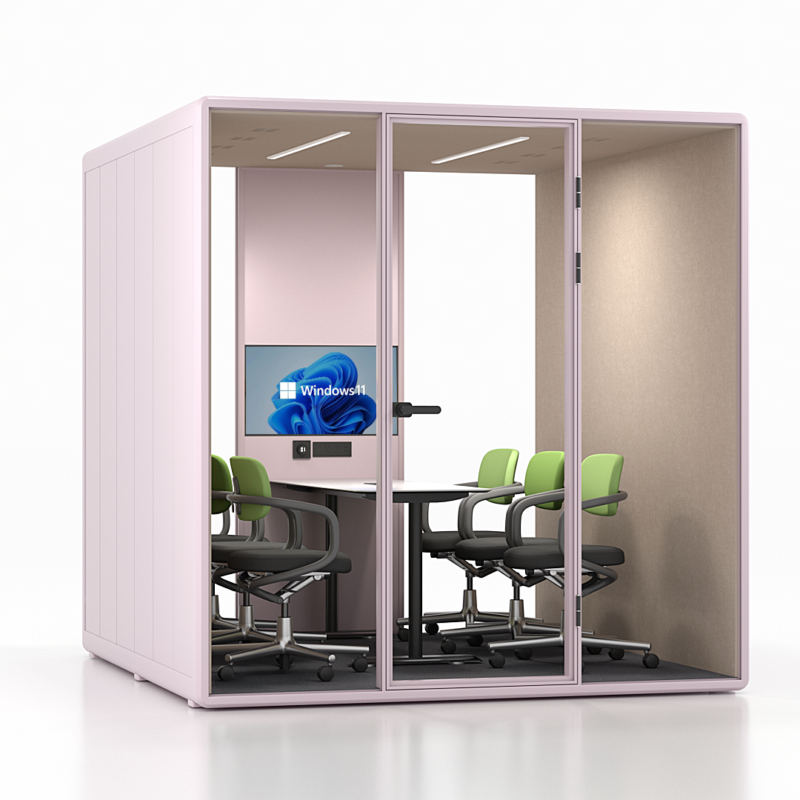
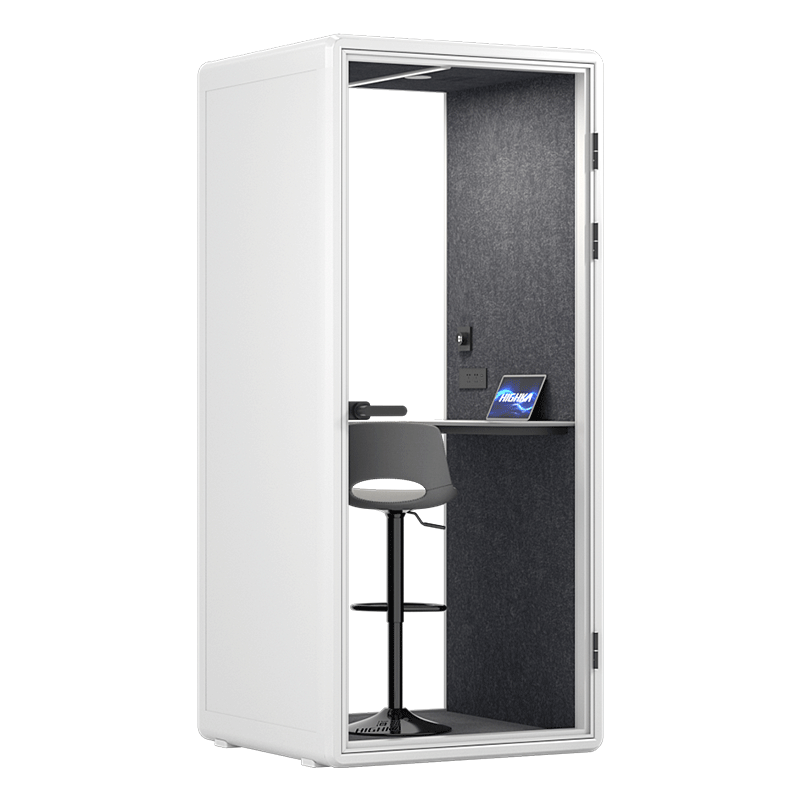
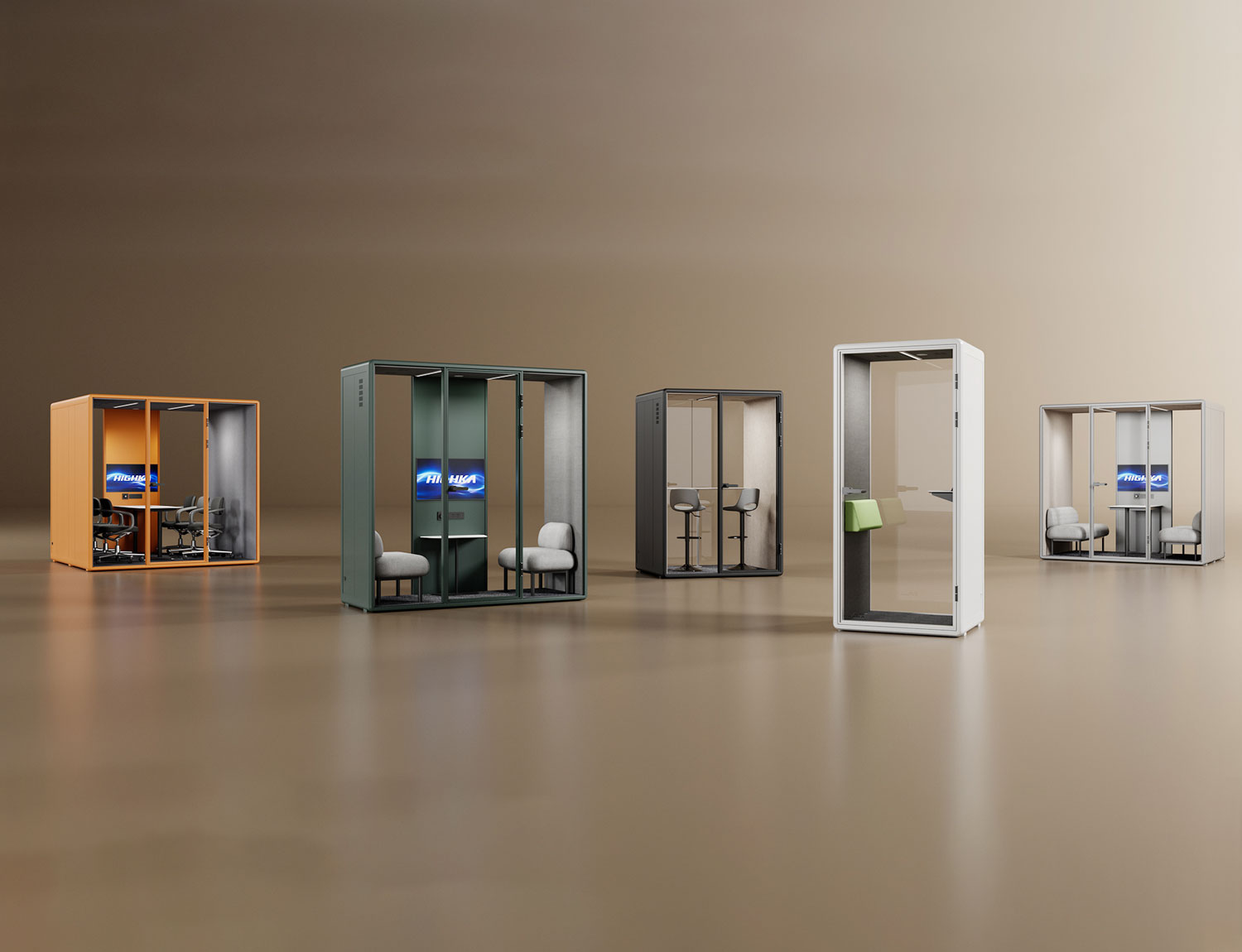
HIGHKA’s six‑model range — Model S (1 person), Model M (1‑2 persons), Model SL (2 persons), Model ML (2‑4 persons), Model L (4‑6 persons), Model XL (6‑8 persons) — provides the full spectrum of enclosed workspace capacity required for a complete spatial layout strategy. All models are freestanding, requiring no construction or permits, and can be repositioned as space needs evolve — providing the layout adaptability that the Leesman research identifies as a key driver of long-term workspace satisfaction.
Design Dimension 5: Biophilic Elements — A 6–15% Boost from Nature Integration
Biophilic design — the deliberate integration of natural elements, materials, and patterns into the built environment — is among the fastest-growing areas of evidence-based workplace design research, with consistent findings across productivity, creativity, and satisfaction outcomes.
A Human Spaces research report on the Global Impact of Biophilic Design in the Interface Workplace found that productivity and creativity levels increase by 6% and 15% respectively in biophilically designed workplaces.
Integrating natural elements into the workplace can increase productivity by 6% and creativity by 15%, according to the Human Spaces biophilic design report.
The mechanism operates through multiple pathways: natural materials and patterns activate the restorative attention networks of the brain, providing cognitive recovery from directed attention fatigue; views of natural scenes or high-quality natural material surfaces reduce physiological indicators of stress; and the presence of living plants improves air quality through CO₂ absorption and humidity regulation, contributing to the air quality productivity benefit described above.
For organisations implementing HIGHKA pods as part of their workplace design, the colour palette choices — 8 exterior colour options developed through market research with 500+ participants — allow pods to be integrated harmoniously with biophilic design schemes, whether warm wood-tone environments or cooler natural-material palettes. The material composition of HIGHKA pods (95% recyclable, EU E1 formaldehyde-compliant, selected through a rigorous ecological impact assessment) aligns with the material quality standards that biophilic design specifiers require.
The Integrated Workplace Design Impact Model: Quantifying the Combined Effect
The five design dimensions above are not independent. They interact — and their combined effect is substantially larger than the sum of individual components. The following table presents the published productivity impact range for each dimension and the cumulative potential when all five are addressed:
| Design Dimension | Published Productivity Impact | Key Standard | HIGHKA Contribution |
|---|---|---|---|
| Acoustics | Up to 2x focus time in open-plan; 37% of workers report productivity decrease | WHO ≤35 dB; ISO 23351-1 | SGS report according to ISO 23351-1: DS,A = 29.4 dB speech‑level reduction; frequency‑dependent attenuation:125 Hz 25.1 dB,500 Hz 28.8 dB,2000 Hz 39.3 dB,4000 Hz 41.1 dB,8000 Hz 43.9 dB |
| Lighting | 6.7–12% boost (JFMER; Human Spaces) | EN 12464-1; UGR <19 | 0–1,800 lm; 3,000K–6,500K; Osram LED; UGR <20; CRI 90 |
| Air Quality | Up to 11% improvement (World Green Building Council) | CO₂ <1,000 ppm; EU E1 | Dual-channel active ventilation; EU E1 compliant |
| Spatial Layout | 20% productivity increase (Design Council) | Balanced collaboration + focus | 6-model range; freestanding; repositionable |
| Biophilic Elements | +6% productivity; +15% creativity (Human Spaces) | Natural materials, natural light | 8 colour options; 95% recyclable; material quality |
The Financial Case: Calculating Your Workplace Design ROI
The productivity impact percentages above translate into concrete financial outcomes. The following calculation framework enables organisations to estimate the return on a workplace design investment.
Step 1 — Establish your productivity baseline cost. Calculate total annual employee cost (salary + benefits + overhead — typically 1.3–1.5× salary). For a 40-person knowledge worker team with average total cost of $120,000 per person: $4.8 million annual people cost.
Step 2 — Apply the acoustic design improvement factor. Based on the ASID-documented 16% presenteeism improvement from workplace design investment: 16% of $4.8 million = $768,000 in annual productivity value improvement.
Even applying a conservative 8% improvement — half the ASID-documented rate — produces $384,000 per year in recovered productivity value.
Step 3 — Compare against investment cost. A HIGHKA pod deployment providing enclosed acoustic focus and call spaces for a 40-person team (6–8 pods): pod investment, no construction costs, no permits, no architect fees, no HVAC adaptation, no reinstatement liability. The asset is retained at lease end and relocated rather than written off.
Step 4 — Add retention value. 93% of tech workers said they would stay longer at a company offering healthier workplace benefits. At an average mid-level knowledge worker replacement cost of $15,000–$50,000, retaining even one additional employee per year through improved workspace quality generates a return equal to a significant proportion of the pod investment.
| Design Dimension | Published Productivity Impact | Key Standard | HIGHKA Contribution |
|---|---|---|---|
| Acoustics | Up to 2x focus time in open-plan; 37% of workers report productivity decrease | WHO ≤35 dB; ISO 23351-1 | DS,A = 29.4 dB speech‑level reduction; frequency‑dependent attenuation:125 Hz 25.1 dB,500 Hz 28.8 dB,2000 Hz 39.3 dB,4000 Hz 41.1 dB,8000 Hz 43.9 dB |
| Lighting | 6.7–12% boost (JFMER; Human Spaces) | EN 12464-1; UGR <19 | 0–1,800 lm; 3,000K–6,500K; Osram LED; UGR <20; CRI 90 |
| Air Quality | Up to 11% improvement (World Green Building Council) | CO₂ <1,000 ppm; EU E1 | Dual-channel active ventilation; EU E1 compliant |
| Spatial Layout | 20% productivity increase (Design Council) | Balanced collaboration + focus | 6-model range; freestanding; repositionable |
| Biophilic Elements | +6% productivity; +15% creativity (Human Spaces) | Natural materials, natural light | 8 colour options; 95% recyclable; material quality |
Frequently Asked Questions
HIGHKA pods are designed to function as acoustic infrastructure components within a broader spatial design strategy. They can be deployed as part of a formal activity-based working zone plan (as described in the ABW framework), integrated into LEED, WELL, and BREEAM-certified workplace environments (HIGHKA pods support WELL v2 compliance across Acoustic and Light concepts), or added incrementally to an existing open-plan floor as the first step in a phased workspace improvement programme. Their freestanding, modular design makes them compatible with all three deployment approaches.
HIGHKA pods feature a dual-channel turbine ventilation system maintaining active airflow throughout occupancy, with air actively refreshed every 30 minutes when unoccupied and a post-use odour clearance cycle after each session. The microwave radar breathing sensor maintains the ventilation system throughout occupancy including during stationary work — preventing the CO₂ accumulation that would otherwise develop during an extended focus session in an enclosed space. All materials are EU E1 formaldehyde-compliant, contributing no additional VOC load to the enclosed air environment.
The challenge with workplace design ROI is not that the evidence is weak — it is that the productivity benefit is diffuse and captured over time, rather than appearing as a line item. The framework in this article provides a structured approach to quantifying the value: total people cost × productivity improvement factor = annual benefit. For a 40-person team at $120,000 average total cost, a conservative 8% productivity improvement generates $384,000 per year in value — making a pod deployment investment economically straightforward to justify.
The WHO Environmental Noise Guidelines and WELL Building Standard v2 recommend ≤35 dB ambient noise for sustained cognitive focus work. HIGHKA pods deliver SGS‑verified DS,A = 29.4 dB speech‑level reduction measured to ISO 23351‑1 protocol, with frequency‑specific attenuation performance:125 Hz 25.1 dB,500 Hz 28.8 dB,2000 Hz 39.3 dB,4000 Hz 41.1 dB,8000 Hz 43.9 dB. Strong attenuation in mid‑high speech‑relevant frequencies helps suppress distracting human speech noise from the open‑plan surrounding environment, bringing internal pod ambient noise close to the research‑recommended threshold. This is independently laboratory‑tested, not a manufacturer self‑assessment.
Yes, and the evidence base is robust. The Design Council study found 20% productivity improvement from strategic design investment. ASID documented 16% presenteeism improvement and 19% absenteeism improvement. ASID’s ROI calculation model accounts for employee productivity, retention, and energy savings, showing that design investment generates financial returns that exceed construction costs over the medium term.
Based on the convergence of research across acoustic, lighting, air quality, and layout dimensions: acoustic quality improvement — specifically, providing enclosed, certified acoustic spaces for focused individual work and calls — consistently shows the largest effect sizes for knowledge worker productivity outcomes. The reason is that acoustic disruption is the most prevalent daily impairment in open-plan environments, and eliminating it delivers immediate, sustained performance improvement for the majority of knowledge work tasks.
Office Design Is a Management Decision, Not an Aesthetic One
The research is unambiguous: the physical workplace is a performance variable. It affects what knowledge workers produce, how long they stay, and whether they experience the conditions in which their best work is possible.
The physical workspace’s layout has a profound impact on employees’ well-being, output, and overall company performance. Businesses that make careful investments in their physical spaces are those positioned to attract and retain talent while boosting performance in an increasingly competitive market.
The five design dimensions — acoustics, lighting, air quality, spatial layout, and biophilic integration — each have published, quantified productivity impacts. They interact synergistically. And they are addressable through a combination of design decisions and physical infrastructure investments that, when quantified against people costs, consistently show positive returns.
The acoustic dimension is where most organisations have the largest gap — and where the highest-impact, fastest-deployable intervention is available. Certified soundproof office pods provide the ≤35 dB enclosed acoustic environment that research identifies as necessary for sustained knowledge work performance, without the cost, timeline, or permanence of construction.
HIGHKA smart soundproof office pods provide the complete technical specification that evidence‑based workplace design requires: SGS‑verified DS,A = 29.4 dB speech‑level reduction under ISO 23351‑1 test protocol with documented octave‑band frequency attenuation; microwave radar breathing sensor (0.1s response, −30°C to 60°C); dual‑channel active ventilation with 30‑minute idle air refresh and post‑use clearance; 0–1,800 lm stepless anti‑glare Osram LED (3,000K–6,500K, CRI 90, UGR <20); industrial‑grade PLC; 95% recyclable EU E1‑compliant materials. Six model sizes (S / M / SL / ML / L / XL), 8 exterior colour options. CE, UL, ISO, SGS certified. Deployed in 50+ countries. 8–12 year operational lifespan. Assembly in 1–4 hours. No permits required.
Ready to design a workplace that performs as hard as your team does?
👉 Request a free workplace design productivity consultation and HIGHKA pod configuration
Share your team size, current office configuration, and primary performance or satisfaction challenges. We will provide an acoustic zone analysis, a pod deployment recommendation, and a productivity ROI estimate — at no obligation.