
Introduction
Your Office Is Running a Quiet Experiment on Your Team’s Brains
Every open-plan office is, whether intentionally or not, running a continuous neurological experiment on its employees.
The variables are noise level, interruption frequency, and acoustic predictability. The outcome metric is cognitive performance. And in the overwhelming majority of cases, the results are not good.
This isn’t opinion. It’s the conclusion of decades of research in cognitive neuroscience, occupational psychology, and environmental design. The science is specific, reproducible, and increasingly hard for business leaders to ignore.
The good news: the research doesn’t just explain the problem. It points directly to the solution — and that solution is precisely what a well-designed soundproof office pod delivers.
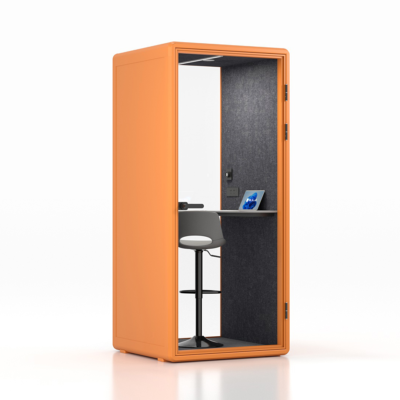
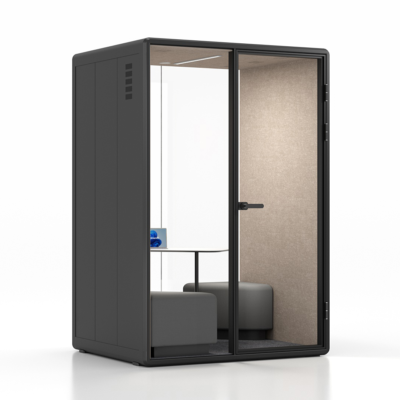
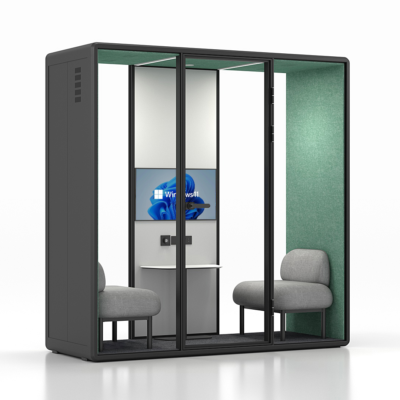
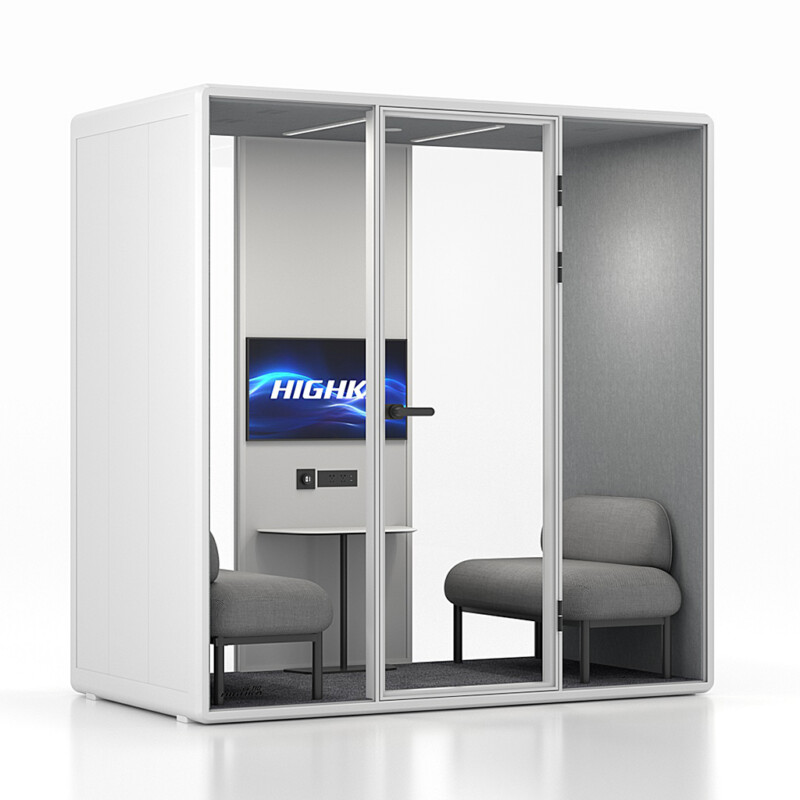
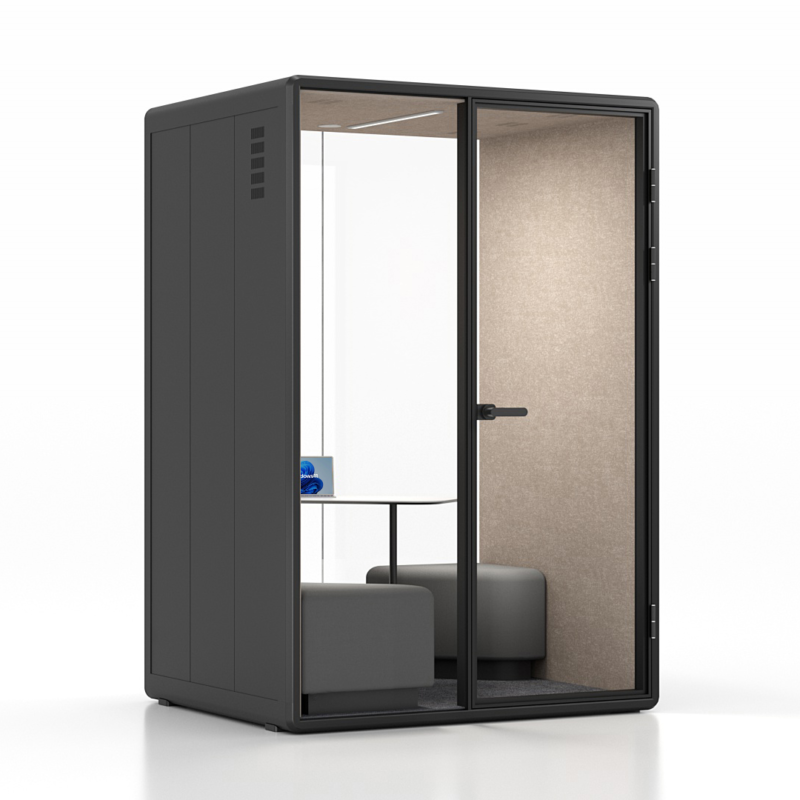
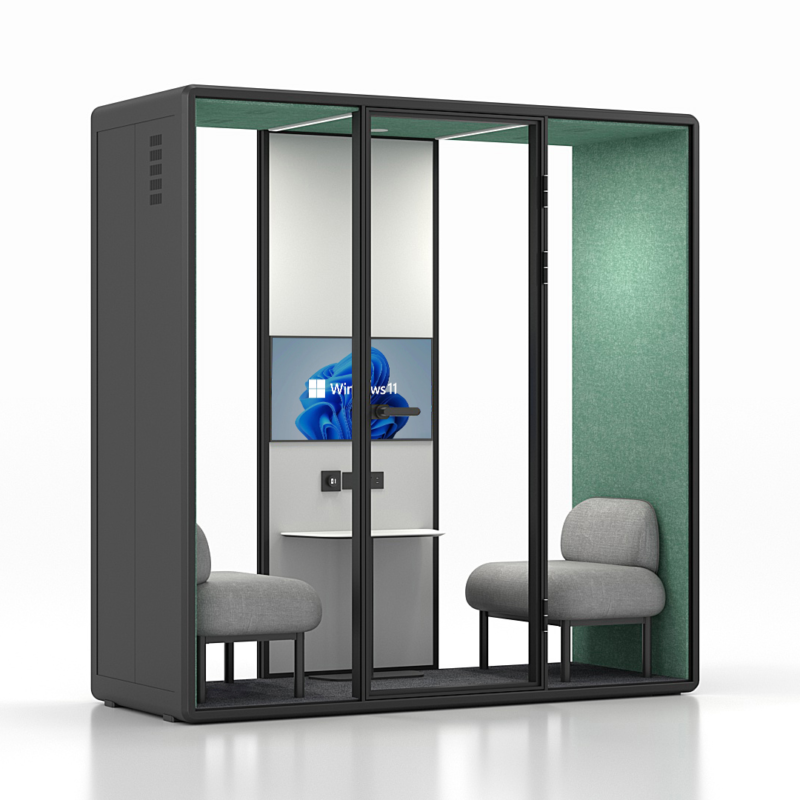
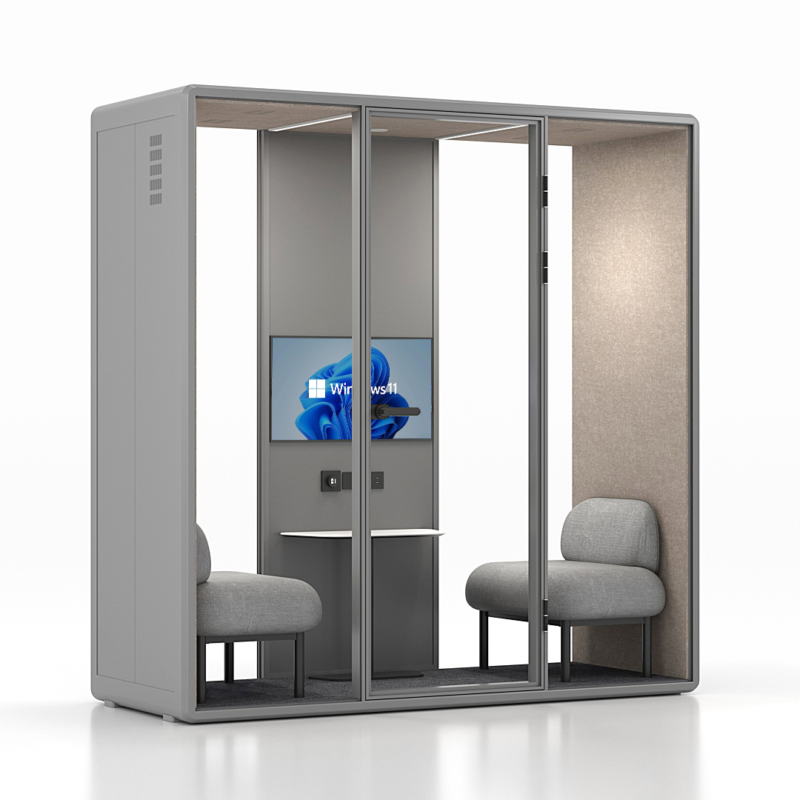
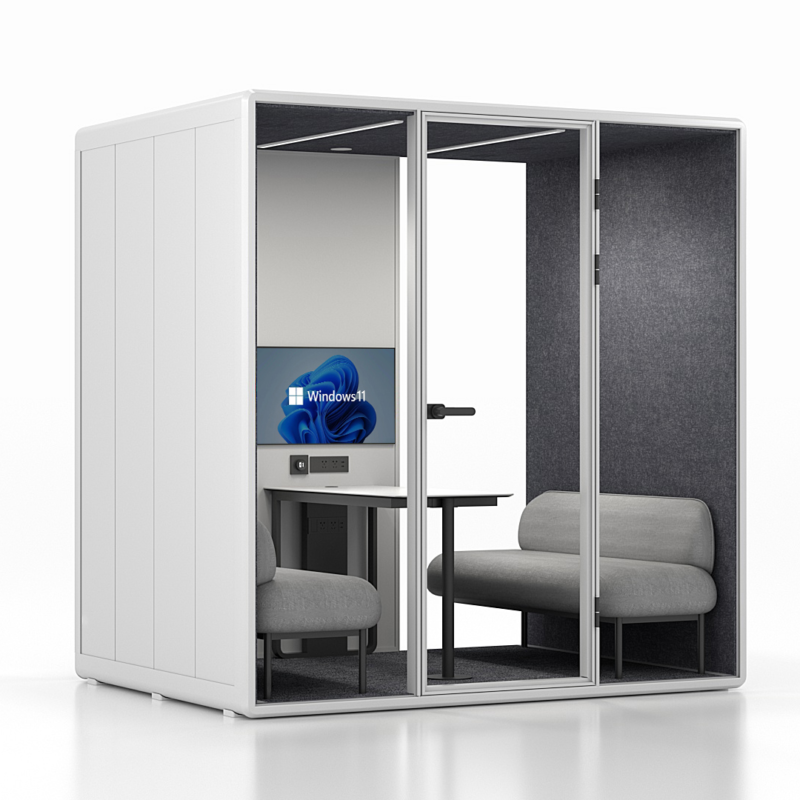
In this article, we go deeper than “noise is distracting.” We explain the neurological and physiological mechanisms through which office noise degrades performance, and we show exactly how HIGHKA smart soundproof pods are engineered to work with your employees’ biology — not against it.
Part 1: What Noise Actually Does to the Brain
The Prefrontal Cortex Under Siege
The prefrontal cortex (PFC) is the brain region responsible for everything we associate with high-performance knowledge work: planning, decision-making, working memory, impulse control, and sustained attention. It is also, unfortunately, one of the most noise-sensitive regions of the human brain.
When the PFC is exposed to unpredictable, variable noise — precisely the kind generated in an open-plan office — it does not simply “filter it out.” Neuroimaging research shows that the brain actively monitors background noise for potential threats or relevant signals, consuming significant prefrontal resources in the process. This is an evolutionarily ancient response: the brain cannot afford to ignore unexpected sounds, because throughout most of human history, unexpected sounds signalled danger.
The practical consequence for a knowledge worker sitting in an open office: a meaningful portion of their cognitive capacity is permanently allocated to unconscious sound monitoring — capacity that is therefore unavailable for focused work.
Cognitive Load and Working Memory Degradation
Working memory — the brain’s temporary holding space for information currently being processed — has a strictly limited capacity. Research by cognitive psychologist Nelson Cowan suggests that most adults can hold four to seven distinct “chunks” of information in working memory at any one time.
Office noise degrades working memory in two ways. First, speech — particularly intelligible speech from nearby conversations — is processed by the language centres of the brain automatically and involuntarily. Even when a worker is actively trying to ignore a colleague’s conversation, the semantic content of that conversation is being partially decoded. This process consumes working memory capacity directly.
Second, each interruption — whether a noise spike, a colleague’s question, or a phone ringing nearby — requires the brain to “save state” (preserve the current task context), redirect attention, process the interruption, and then “reload state” (reconstruct the previous task context). Research from the University of California, Irvine, has quantified this recovery process at 20–23 minutes per interruption for complex cognitive tasks.
In a typical open office generating 6–8 significant interruptions per hour, a knowledge worker may spend the majority of their working day in a perpetual state of partial cognitive recovery — never fully returning to peak cognitive function between interruptions.
The Cortisol Connection: How Noise Becomes Chronic Stress
Noise does not merely impair cognitive function in the moment. Sustained exposure to uncontrollable ambient noise triggers the release of cortisol — the body’s primary stress hormone — via the hypothalamic-pituitary-adrenal (HPA) axis.
In short bursts, cortisol is adaptive and useful. Sustained at elevated levels, it has serious consequences: impaired memory consolidation, reduced neuroplasticity, suppressed immune function, and — critically for employers — significantly elevated risk of burnout, anxiety disorders, and depression.
A 2019 study published in the Journal of Environmental Psychology found that employees in open-plan offices showed measurably higher physiological stress markers — including elevated cortisol — compared to colleagues in enclosed private offices performing identical tasks.
The implication is direct: chronic open-office noise exposure is not merely a productivity problem. It is a public health issue with real costs in healthcare utilisation, absenteeism, and long-term workforce capability.
Part 2: The Acoustic Conditions the Brain Actually Needs
Understanding what noise does to the brain immediately clarifies what the alternative should provide. High cognitive performance requires three specific acoustic conditions — and a well-engineered soundproof office pod delivers all three.
Condition 1: Acoustic Predictability
The brain’s stress response to noise is primarily triggered not by volume, but by unpredictability. A consistent background hum (such as an HVAC system at a steady 40dB) is far less cognitively disruptive than variable, speech-like noise at the same average volume — because the brain habituates to predictable stimuli but cannot habituate to unpredictable ones.
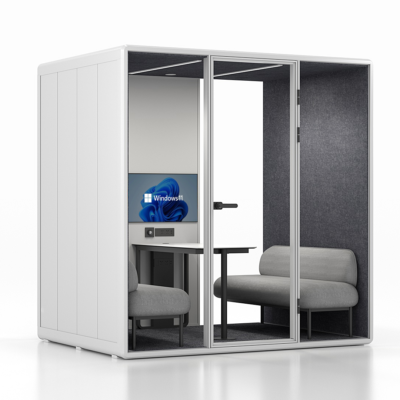
A HIGHKA soundproof pod creates a fully acoustically controlled environment. With 29.4 dB DS,A speech level reduction (SGS certificated per ISO 23351-1), the chaotic, variable noise of an open office is replaced by a quiet, consistent acoustic baseline.. The brain’s threat-monitoring system can finally stand down — and the cognitive resources it was consuming become available for actual work.
Condition 2: Speech Intelligibility Elimination
The most cognitively disruptive form of office noise is intelligible nearby speech — not because it is loudest, but because the brain cannot stop processing it. Research by psychologist Nick Perham at Cardiff Metropolitan University found that background speech significantly impairs performance on serial recall tasks, reading comprehension, and written output quality — even when participants subjectively reported being unaffected.
The 29.4 dB DS,A speech level reduction of HIGHKA pods is specifically calibrated to significantly reduce background conversational speech (typically 55–65dB at 1 metre), bringing it well below comfortable hearing levels and reducing its intelligibility. Inside the pod, background voices become unintelligible noise — and the brain stops processing them as language. The effect on focus quality is immediate and measurable.
Condition 3: Psychological Safety and Cognitive Closure
The third acoustic condition the brain needs for peak performance is less intuitive but equally important: a sense of enclosure and psychological safety. Open environments trigger a mild but persistent state of environmental vigilance — a background awareness of being observed, potentially interrupted, or overheard. This state is incompatible with the psychological conditions required for deep, creative, or vulnerable cognitive work.
Research in environmental psychology confirms that enclosed spaces — even relatively small ones — promote a sense of psychological safety that enables deeper cognitive engagement. Employees working in an enclosed pod are not merely protected from noise. Their brains are neurologically freed to operate at a deeper level of engagement than is possible in an open environment, regardless of the actual noise level.
This is why employees who use soundproof pods frequently report not just “less noise” but a qualitatively different cognitive experience — one characterised by deeper focus, greater creative output, and less mental fatigue at the end of a session.
Part 3: How HIGHKA Pods Are Engineered for Human Cognition
Understanding the neuroscience allows us to evaluate office pods against a more rigorous standard than “does it feel quieter?” The right question is: does it create the specific conditions the brain requires for peak performance?
HIGHKA’s engineering choices are directly relevant to each of the three conditions identified above.
25–43dB Noise Reduction: The Cognitive Threshold
This is not an arbitrary specification. HIGHKA pods achieve 29.4 dB DS,A speech level reduction, certified under ISO 23351-1 — the international standard for measuring acoustic enclosure performance. This level of reduction is sufficient to bring typical open-plan office noise (60–70 dB) down to a range associated with meaningfully quieter cognitive conditions, reducing the intelligibility of background speech and freeing the brain’s noise-monitoring resources.
Products that claim “noise reduction” without specifying dB levels — or that achieve only 15–20 dB — fall short of delivering this cognitive benefit. Research indicates that meaningful acoustic relief begins at approximately 25–30 dB of speech-frequency attenuation, and HIGHKA’s certified 29.4 dB DS,A performance sits squarely within this effective range.
mmWave Breathing Sensor: Eliminating Micro-Interruptions
One of the most cognitively disruptive experiences inside a poorly designed pod is the lighting or ventilation suddenly switching off — typically because a PIR (passive infrared) sensor has incorrectly identified the space as empty during a period of stillness.
This is a genuine neurological problem. The sudden environmental change — darkness or silence — triggers an orienting response in the brain: a reflexive redirection of attention to assess the unexpected change. Even if the user immediately reactivates the system, the cognitive thread they were following has been severed.
HIGHKA’s mmWave (millimetre-wave) breathing sensor eliminates this problem entirely by detecting the micro-movements of respiration. Lighting and ventilation remain continuously active for the duration of each session, with no interruptions regardless of how still the user becomes during deep focus or careful listening.
Dual-Channel Ventilation: Oxygen for Cognitive Performance
HIGHKA’s mmWave (millimetre-wave) breathing sensor eliminates this problem entirely by detecting the micro-movements of respiration. Lighting and ventilation remain continuously active for the duration of each session, with no interruptions regardless of how still the user becomes during deep focus or careful listening.
Cognitive performance is directly dependent on oxygen supply to the brain — and therefore on CO₂ concentration in the working environment. Research in indoor air quality consistently shows that elevated CO₂ levels (above 1,000 ppm) produce measurable degradation in decision-making quality, response accuracy, and information processing speed.
In a sealed acoustic enclosure without active ventilation, CO₂ concentration can exceed 1,000 ppm within 15–20 minutes of single occupancy. HIGHKA’s dual-channel turbine ventilation system — with separate intake and exhaust channels and synchronised fans — maintains active air exchange every 65 seconds, keeping CO₂ well within the range associated with optimal cognitive performance throughout sessions of any length.
Stepless Lighting Control: Circadian-Aligned Illumination
Lighting has a direct effect on cognitive performance through its influence on the circadian system. Research in chronobiology shows that higher colour temperatures (5,000K–6,500K, approximating daylight) promote alertness, working memory performance, and sustained attention. Warmer temperatures (3,000K–4,000K) support creative thinking and reduce stress in high-pressure cognitive tasks.
HIGHKA’s stepless lighting system — adjustable from 0 to 1,800 lumens across a 3,000K–6,500K colour temperature range — allows users to set lighting conditions appropriate to their specific cognitive task. This is not a comfort feature. It is a direct lever for optimising the neurological conditions under which work occurs.
Part 4: The Organisational ROI of Cognitive Optimisation
The neuroscience makes a compelling case for individual performance. The business case extends further: what is the organisational value of systematically improving the cognitive conditions of your entire workforce?
Consider a team of 20 knowledge workers, each losing an average of 2 hours per day to noise-related distraction and interruption recovery — a conservative estimate supported by research. At an average fully-loaded employment cost of $50 per person per hour, this represents $2,000 per day in lost productivity value, or approximately $500,000 per year for the team alone.
A deployment of HIGHKA pods adequate for a 20-person team — a mix of solo focus pods and small meeting pods — represents a fraction of this annual productivity loss. The payback period, measured in recovered cognitive output alone, is typically measured in weeks rather than years.
This framing changes the purchasing conversation fundamentally. Office pods are not a facilities expense. They are a workforce performance investment with a measurable, calculable return.
Part 5: Building a Brain-Optimised Office — A Practical Implementation Guide
The neuroscience and ROI case established, the practical question becomes: how do you translate this into a real office environment? Here is a step-by-step framework.
Step 1: Audit Your Current Acoustic Environment
Measure the ambient noise level in your office during peak hours (a free smartphone decibel meter app provides a reasonable approximation). If your average ambient level exceeds 55dB, you are operating above the threshold at which cognitive performance begins to degrade. If it regularly exceeds 65dB, the impact is severe.
Step 2: Map Your Team’s Cognitive Work Profile
Not all work is equally affected by noise. Identify the proportion of your team’s working time that involves high-cognitive-load tasks: complex analysis, writing, coding, strategic planning, or any task requiring sustained working memory. These are the hours during which acoustic conditions matter most.
Step 3: Identify Your Primary Use Cases
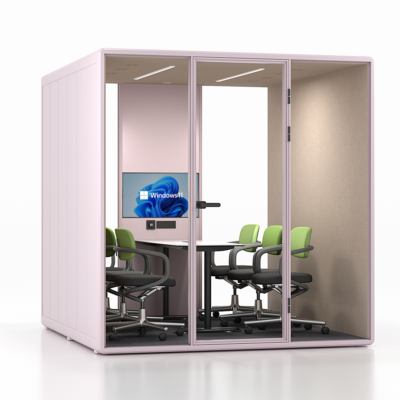
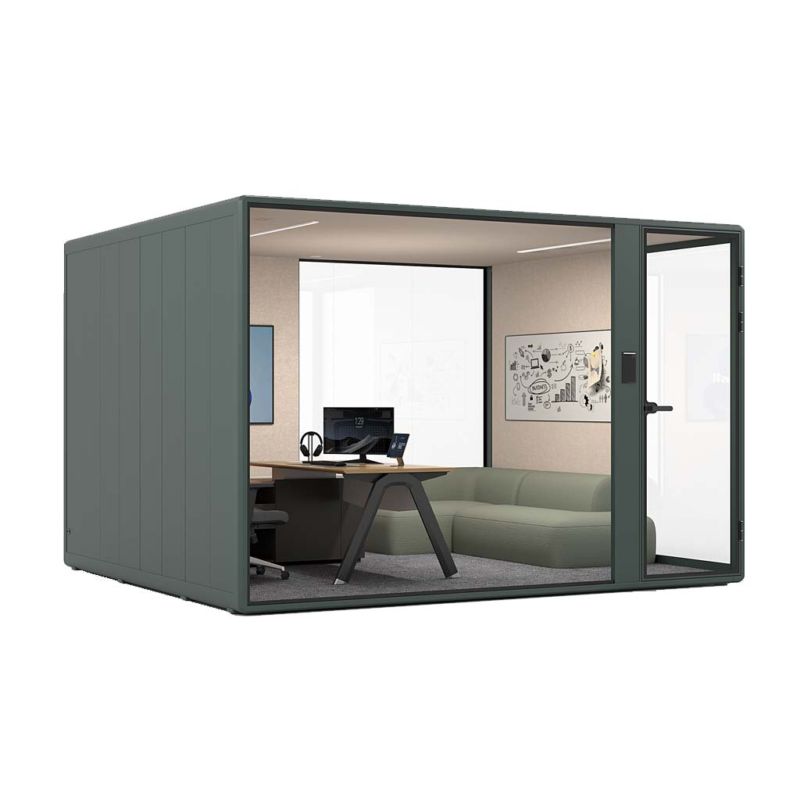
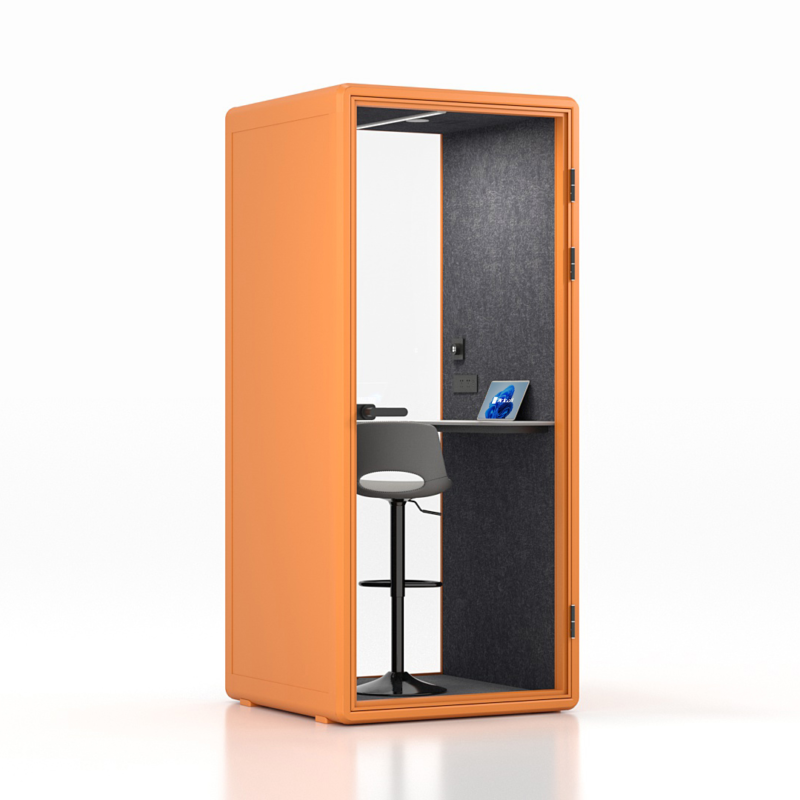
Based on the profiles from Step 2 and a review of how your team actually uses private space today (or would use it if available), determine your primary pod use cases: solo focus work, video calls, confidential 1:1 meetings, or small team collaboration. Each use case maps to a specific pod size in HIGHKA’s range (Model S through XL).
Step 4: Calculate Your Required Pod Coverage
Apply the following planning ratios derived from real-world pod deployment data:
- For cognitive-intensive teams (developers, analysts, writers, lawyers): 1 pod per 5–6 employees
- For mixed-role teams: 1 pod per 8–10 employees
- For call-heavy roles (sales, customer success, support): 1 pod per 4–5 employees
Step 5: Deploy, Measure, and Optimise
Track pod utilisation from week one. A well-placed, well-communicated pod deployment typically reaches 70–80% utilisation within the first month. Utilisation data tells you where demand exceeds supply — the signal to expand your deployment.
Frequently Asked Questions
Yes, significantly. The ISE is strongest for speech-band frequencies (500–4,000 Hz), which is why conversational speech is more disruptive than mechanical noise of equivalent measured volume. This is also why acoustic solutions that target the speech frequency range — as HIGHKA’s six-layer composite acoustic structure is patent-specifically tuned for 500 Hz–4 kHz — are more effective at eliminating the ISE than broadband absorption approaches that do not specifically attenuate the speech frequency range.
HIGHKA provides warranty coverage for all certified models, with replacement parts and after-sales support available across our global service network covering 20+ countries.
No. HIGHKA pods connect to standard power sockets and include built-in USB and power outlet access for users. No specialist electrical work is required.
In practice, a well-placed HIGHKA pod in a busy hybrid office is used by 4–8 employees per day, each for sessions ranging from 15 minutes to 2 hours. This means a single pod can serve 20–40 employee sessions per week — making the per-use cost extremely low relative to the capital investment.
Depending on your location and configuration, HIGHKA pods are typically delivered and assembled within 1–3 weeks from order confirmation — significantly faster than any construction-based alternative.
HIGHKA pods are compatible with standard USB and power infrastructure. Integration with third-party booking systems depends on your existing workplace management platform; our team can advise on configuration during the consultation process.
HIGHKA pods include automatic post-use ventilation cycling, surface materials selected for ease of cleaning, and an interior design focused on neutral, professional ergonomics suitable for any user. The mmWave breathing sensor ensures each session starts with active air management from the first minute.
The Business Case for Designing With the Brain in Mind
The science is clear. Office noise does not merely annoy employees — it systematically degrades the cognitive machinery through which your organisation creates value. It elevates stress hormones, consumes working memory, fragments attention, and prevents the deep cognitive states where your best people produce their best work.
Soundproof office pods are not an office perk. They are the physical infrastructure of cognitive performance — engineered to create the specific acoustic, atmospheric, and environmental conditions under which human brains operate at their best.
HIGHKA smart soundproof pods are purpose-built for this scientific reality. With 29.4 dB DS,A certified noise reduction (ISO 23351-1), mmWave breathing sensors, dual-channel ventilation maintaining optimal CO₂ levels, stepless circadian-aligned lighting, and full CE/UL/ISO certification, every design choice is traceable to a specific aspect of human cognitive biology.
Speak to our workspace performance specialists today.
👉 Contact HIGHKA for a free cognitive workspace audit and pod configuration consultation
Share your team size, role mix, and current office layout. We’ll provide a science-backed pod deployment recommendation, full technical specifications, and a transparent quote — with no obligation.